

10 Best Flowers for Pressing and Preserving
Not all flowers are created equal when it comes to pressing. Some flowers retain their natural, vibrant colour and unique, delicate shape during and after the process, whereas others fade or lose their charm much more quickly. Choosing the right flowers, particularly as a beginner presser, can make all the difference in getting the best results. Whether you are preserving garden memories, crafting personalised gifts, or making nature-inspired art, knowing which flowers press well can help build your confidence as a presser and get the best results for your crafts.
The best flowers to press are those that are naturally flat, with single, thin petals and low moisture content. These characteristics help them to retain their colour and shape during the pressing process. For more detailed information on pressing, including getting the best results for thicker, trickier flowers, see our Online Courses or Guidebooks.
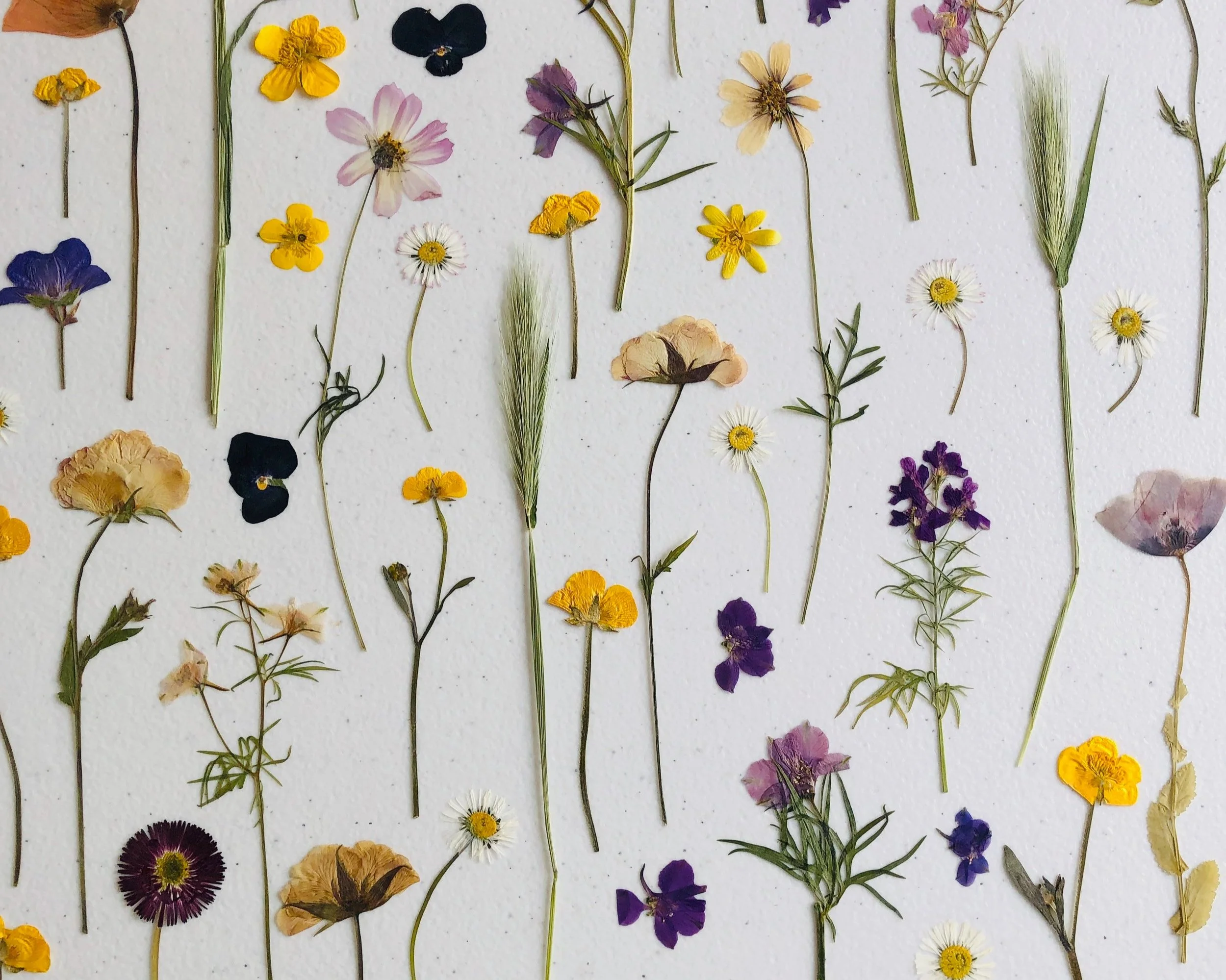
10 of the best flowers to press and why they are ideal:
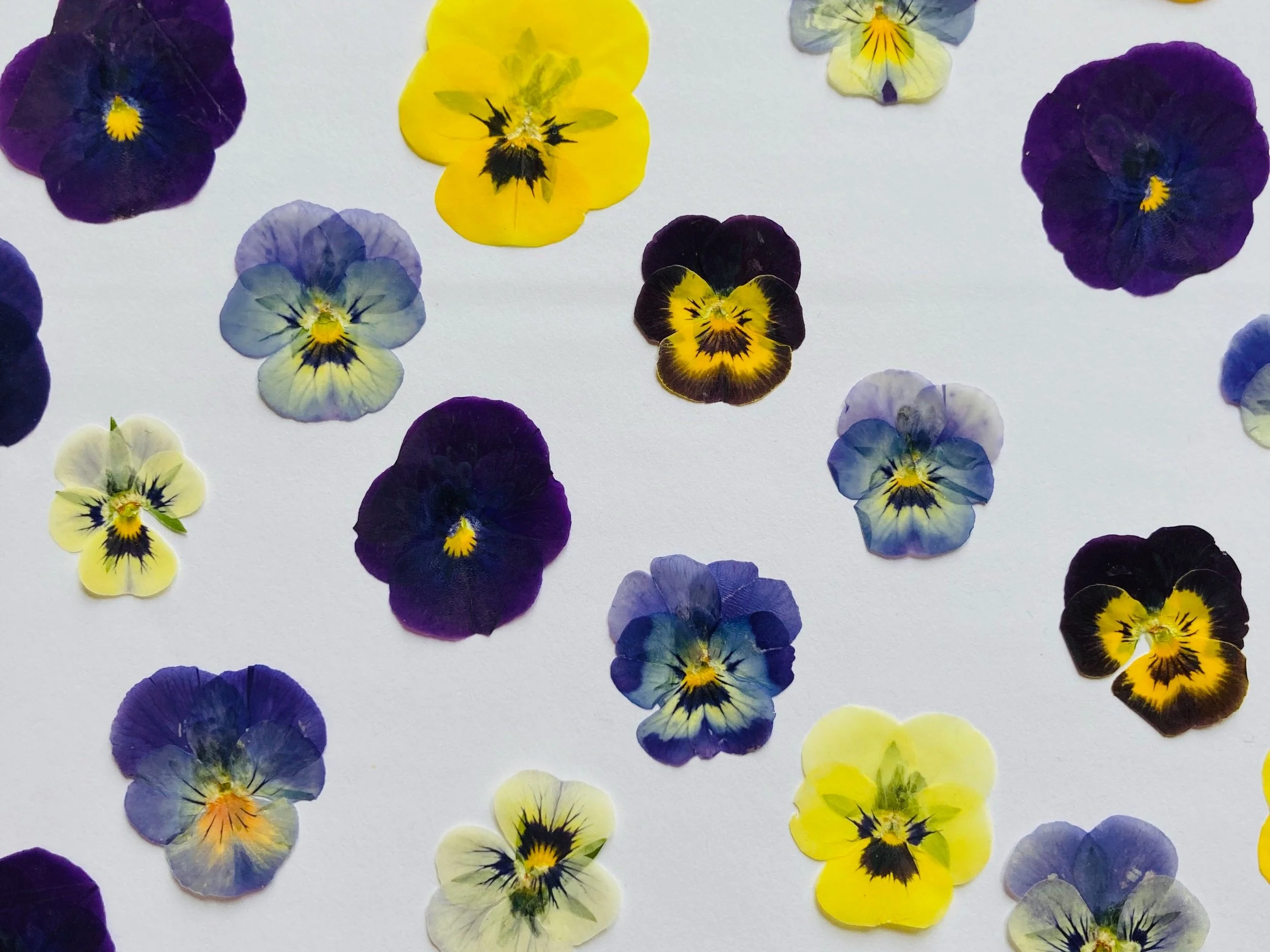
1. Pansies and Violas
Why: Thin, delicate petals and bright colours that retain well. They can be pressed open-faced or side-on with or without their stems. Some will have a crisp, papery feeling once dry, while others will retain a soft, velvety feeling.
Best for: Greeting cards, bookmarks, candles and framed art. Look for smaller varieties to fill gaps in your compositions.
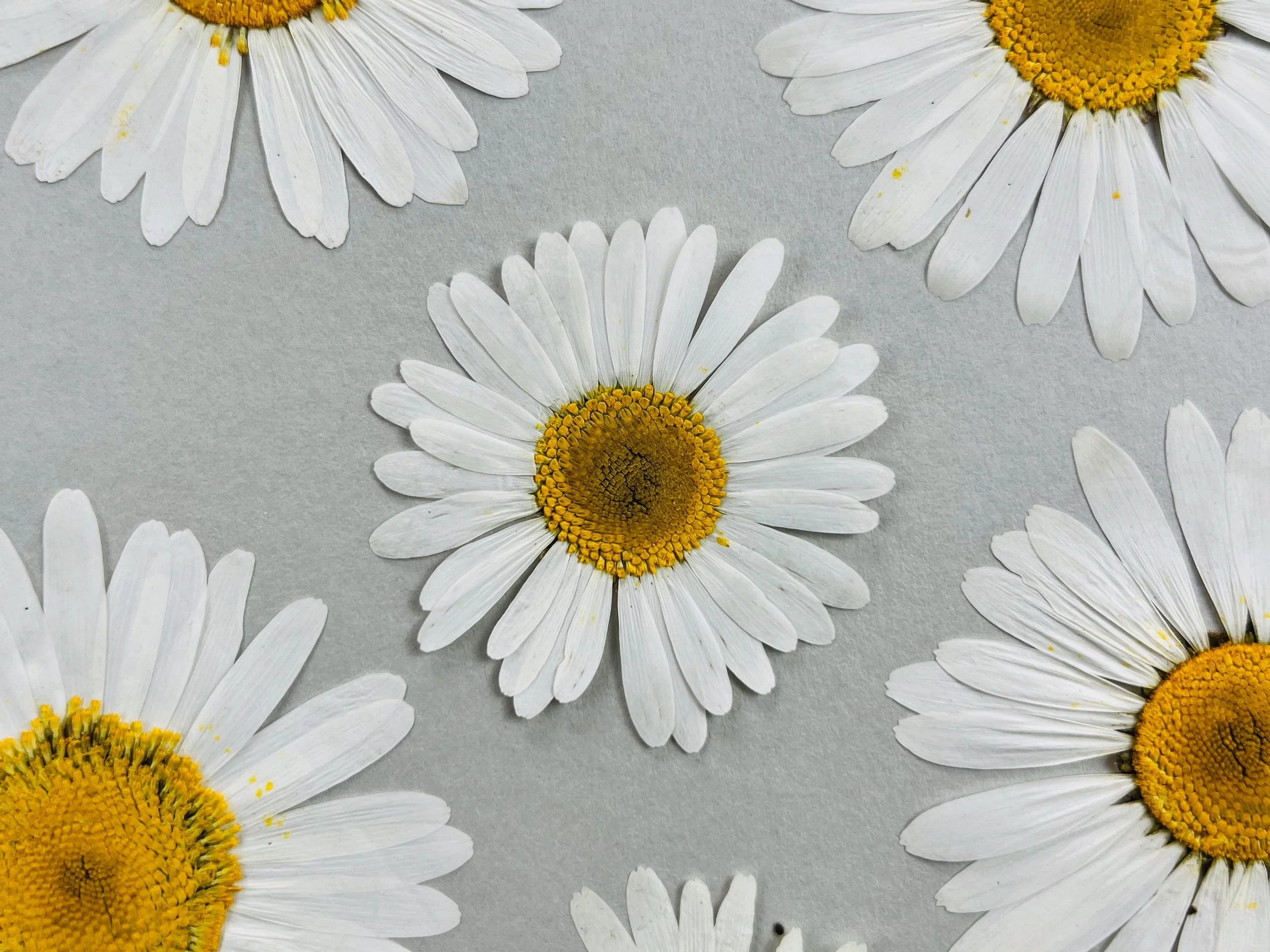
2. Daisies (Common Daisy [Lawn Daisy, English Daisy], Camomile, Oxeye)
Why: Simple, flat shape with a sturdy centre. A trick to prevent petals from shrivelling is to keep good contact with both the petals and centre as they press. Try pressing them between cotton wool pads, or apply a lot of pressure in a traditional press. (For more information on the methods of pressing, see our Guidebooks or Online Courses.)
Best for: Adding a rustic or natural look to projects.
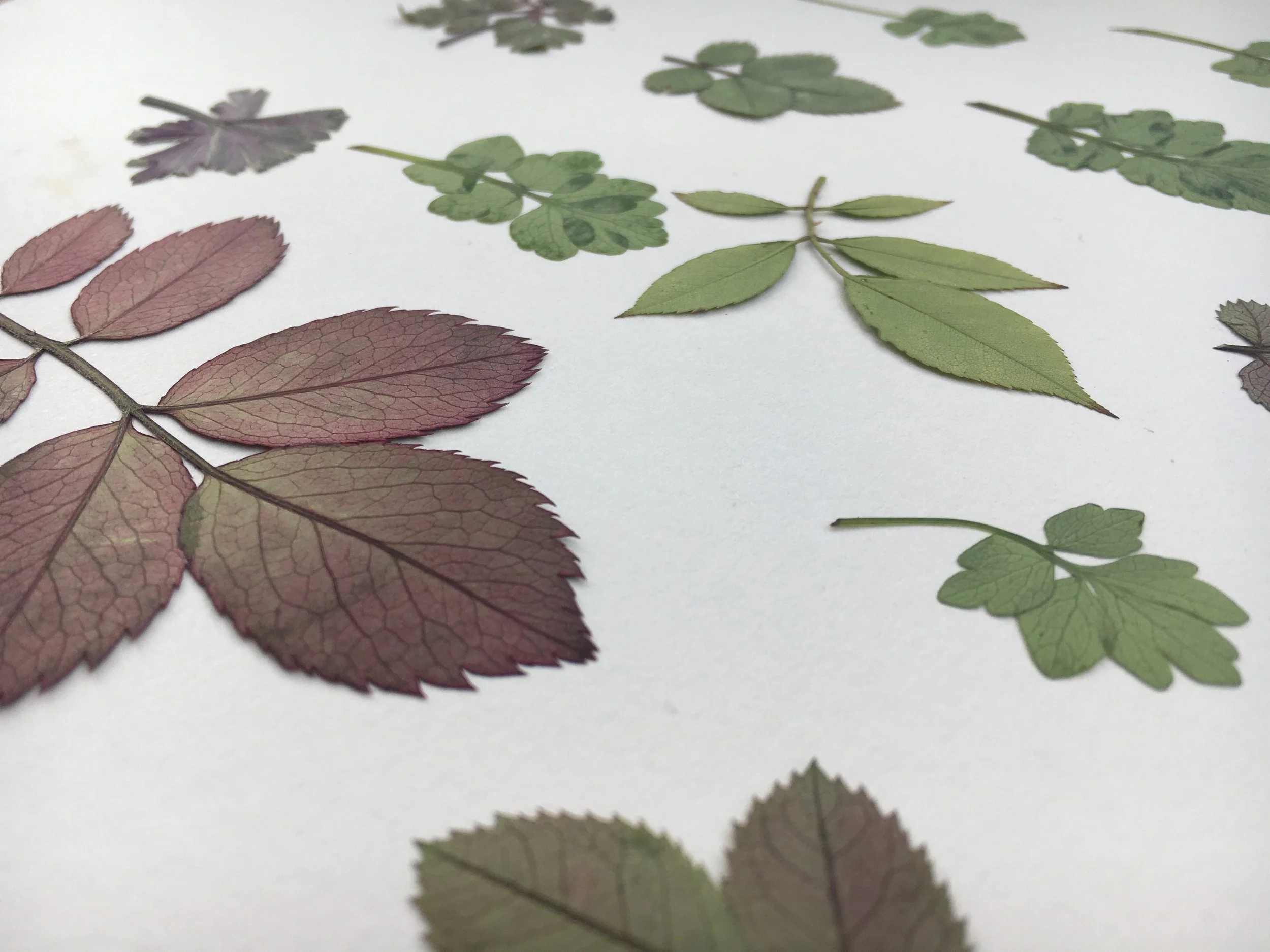
3. Ferns, Leaves and Grasses
Why: Press flat easily and add movement and texture to your artwork. Don’t overlook the foliage of your flowers. Forage for meadow grasses to add height and interest to your projects.
Best for: Backgrounds or layering with your flowers to create a naturalistic look.
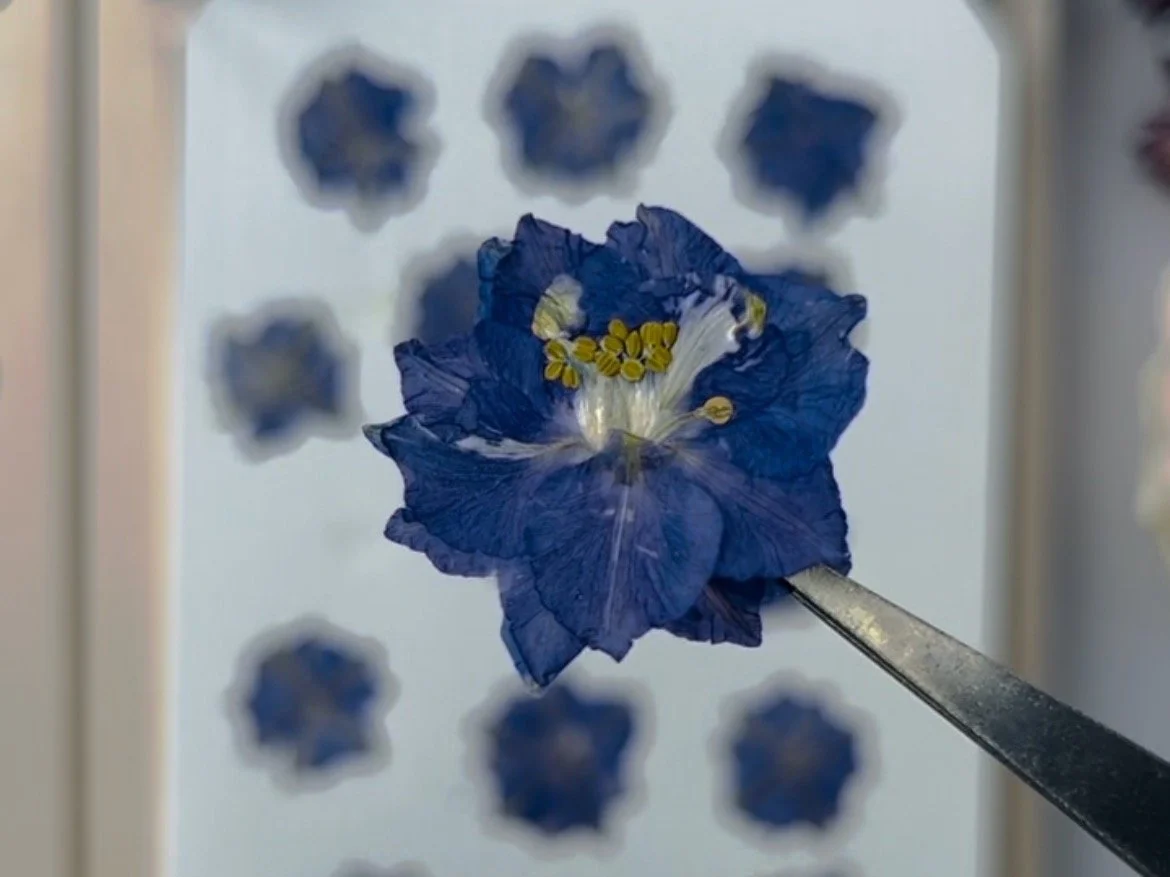
4. Larkspur and Delphinium
Why: Thin petals with vibrant colours that hold well. They can be pressed with or without their stem as they have a low moisture content.
Best for: Framed art and pressed flower arrangements. Their frilly petals can be whimsical and romantic. Try adding single petals to projects, such as Oshibana designs, or jewellery.
5. Forget-Me-Nots (Myosotis)
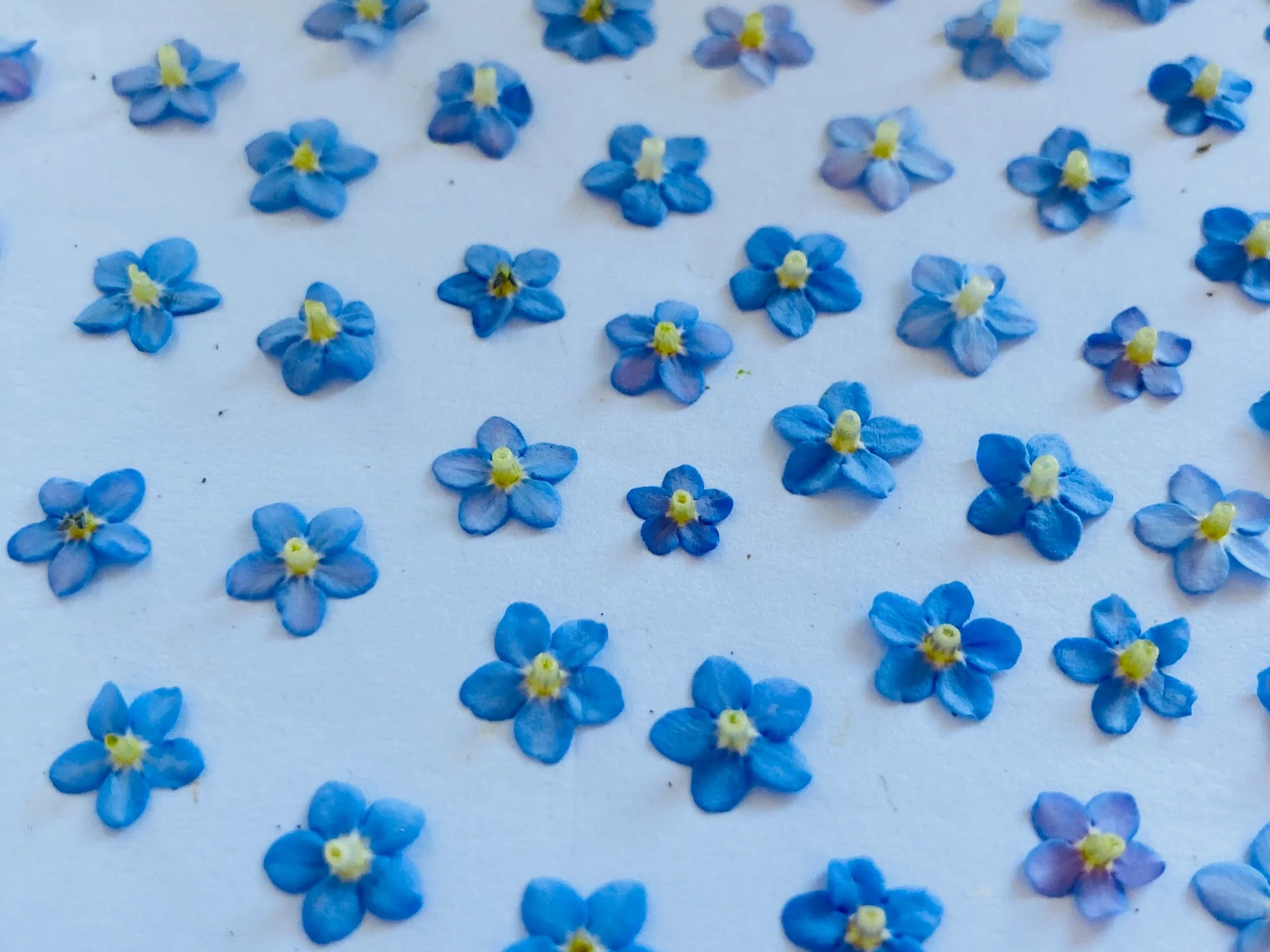
Why: Small, delicate flowers that retain their blue colour well. Try removing their calyx (the collection of green sepals that create a ‘cup’ to hold the blue petals in place) and press the flower heads separately to create beautiful, blue, star-like flowers.
Best for: Delicate designs and jewellery. Their name holds significant meaning for many people.
6. Cosmos
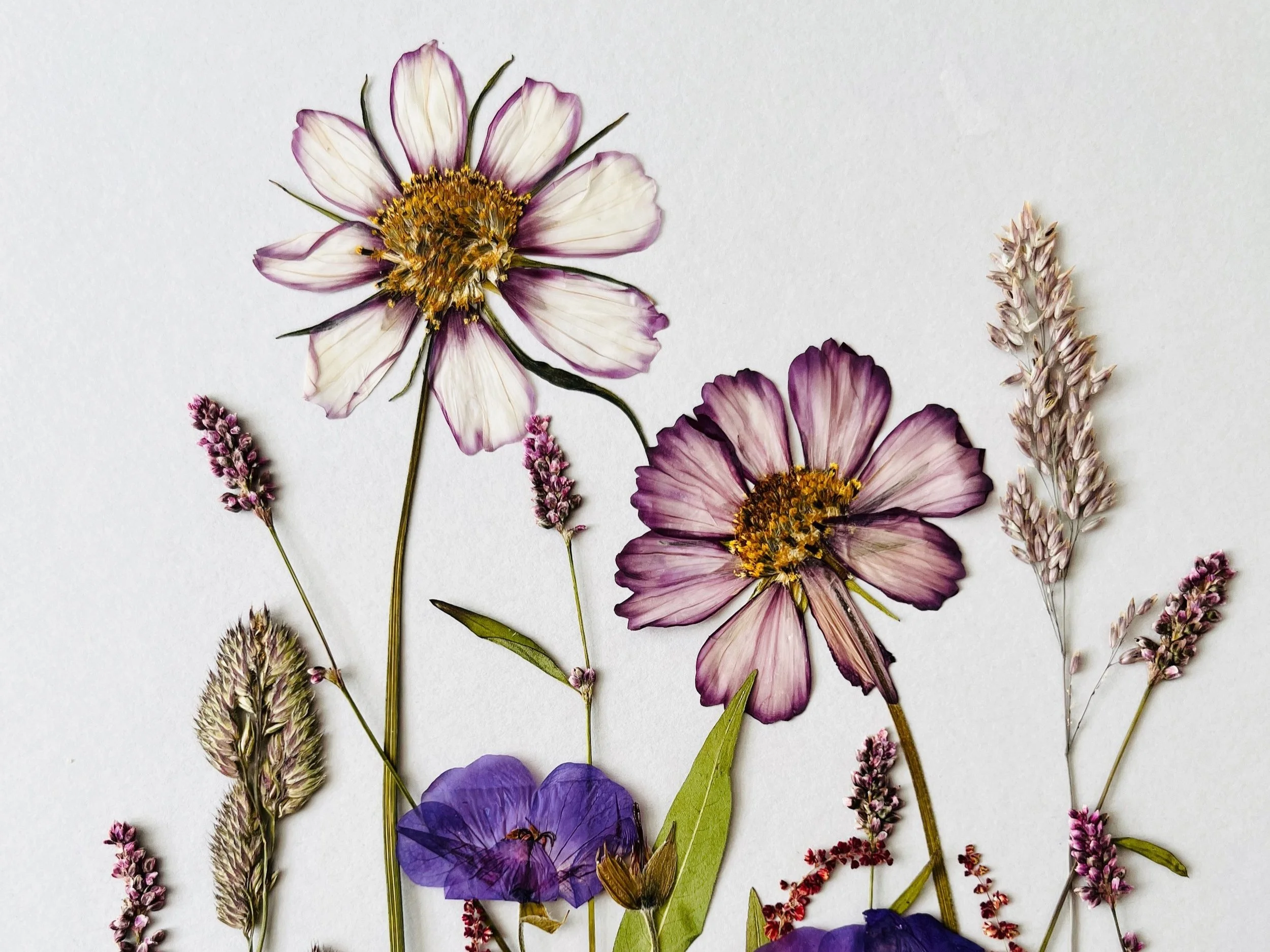
Why: Wide, beautiful blooms that press open and flat with even pressure distributed across them, which is particularly important if you press them with the stem in tact. They come in a multitude of colours and interesting varieties (my favourites are the picotee varieties), and they often retain their colour well.
Best for: Larger pressed flower designs, such as frames or cards. Try cutting them in half and placing them along the edge of your project, or layer them in the background for a meadow-like look.
7. Gypsophila (Baby’s Breath)
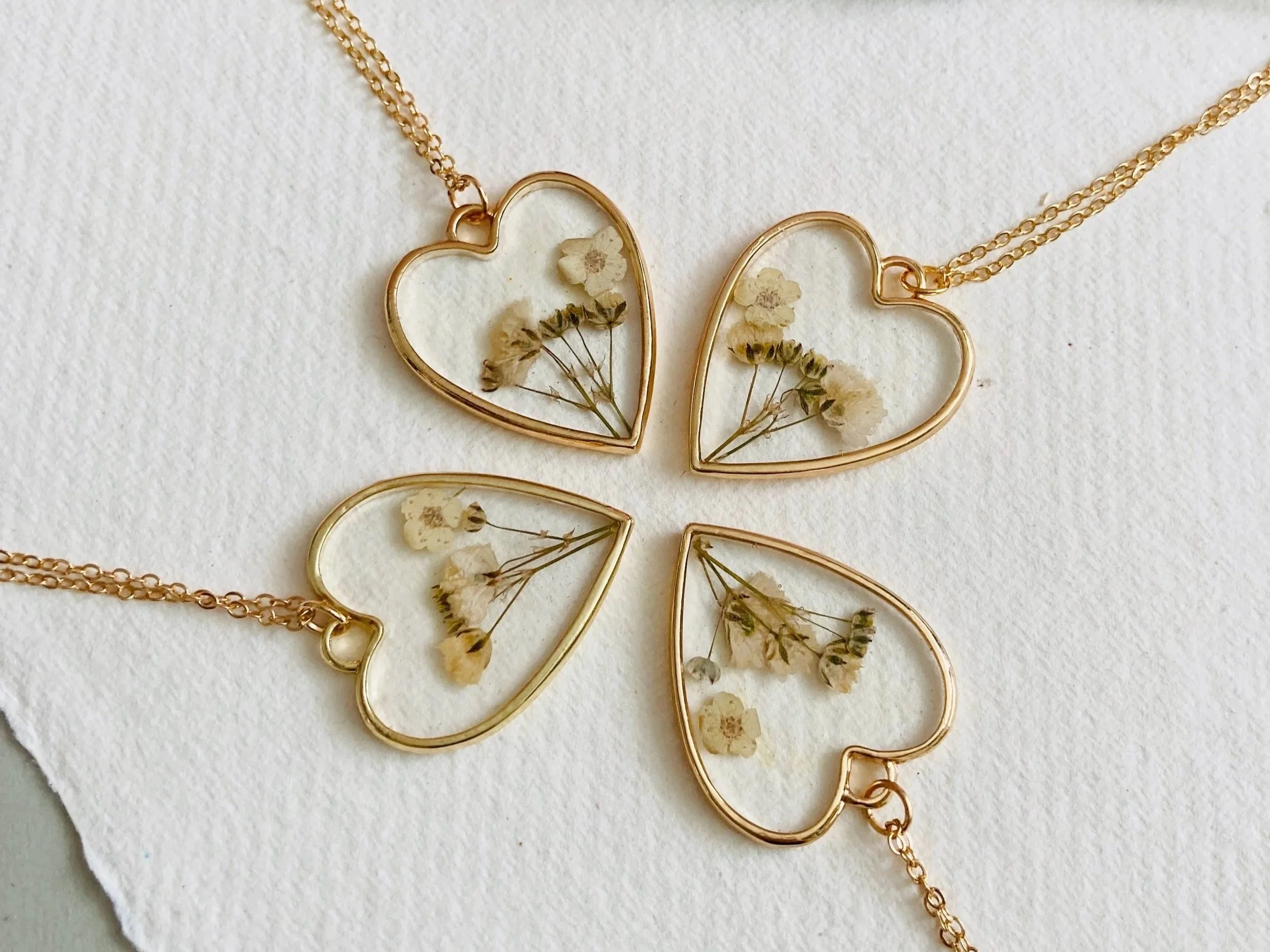
Why: Tiny blossoms that retain their whiteness. They colour correct beautifully too, so you can experiment with more adventurous colours (discover our guidebook on Colour Correction Methods for more information).
Best for: Adding texture or as a filler. They complement larger flowers and look pretty in backgrounds. They are great for personalised christening or wedding gifts, or added to dainty jewellery.
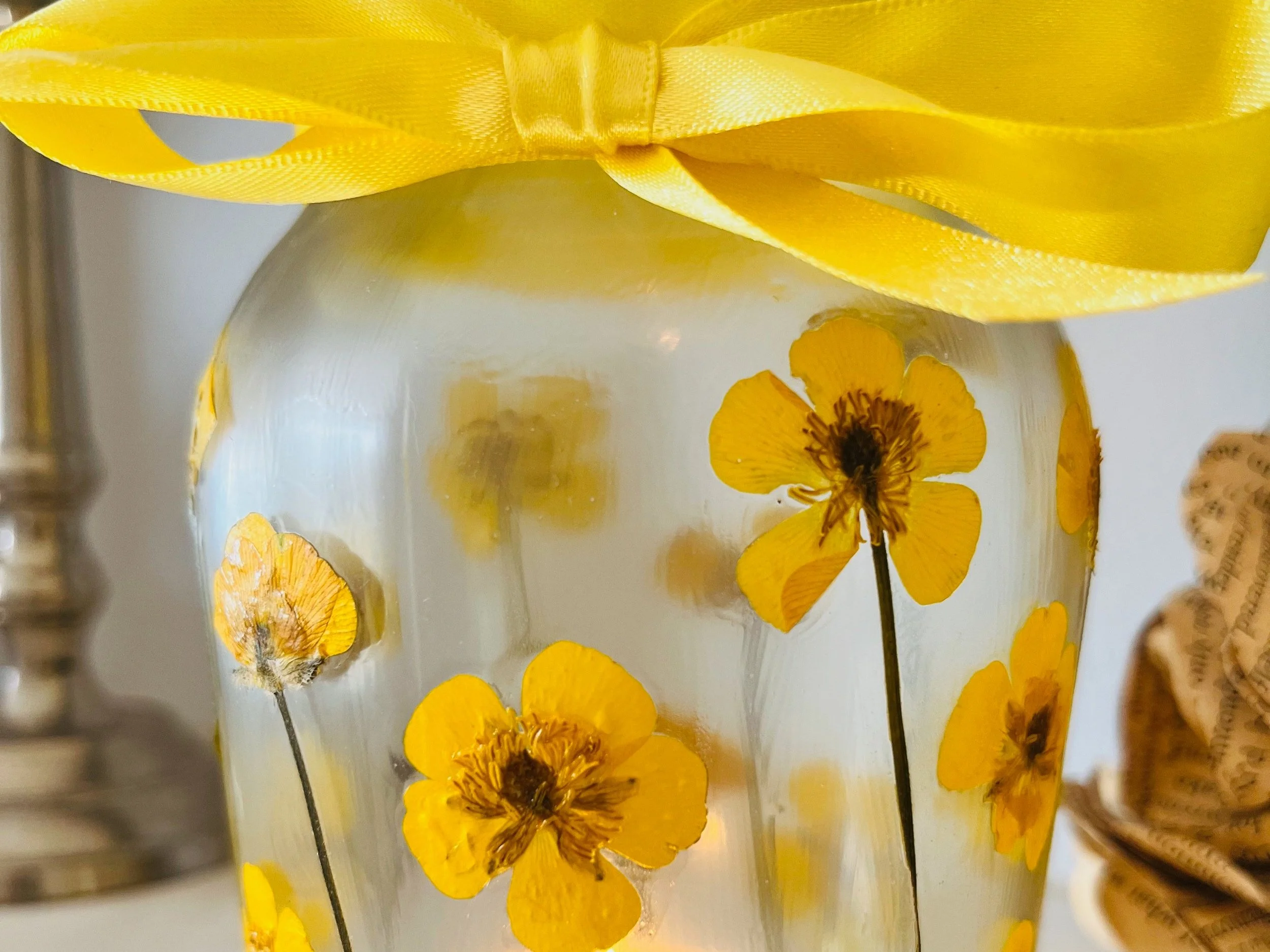
8. Buttercups
Why: Dainty flowers, stems and leaves and a bright, golden colour that often preserves for years. Their sunny faces can be pressed open or side-on. Though creeping buttercup can be a pain for overrunning a garden, it’s beautiful for pressing because of its thinner stems and more delicate flowers.
Best for: Adding bright colour to projects. They are robust and can withstand being applied to candles, or sealed for cards or tea lights (see the blog ‘5 Crafts with Pressed Flowers’ for more inspiration).
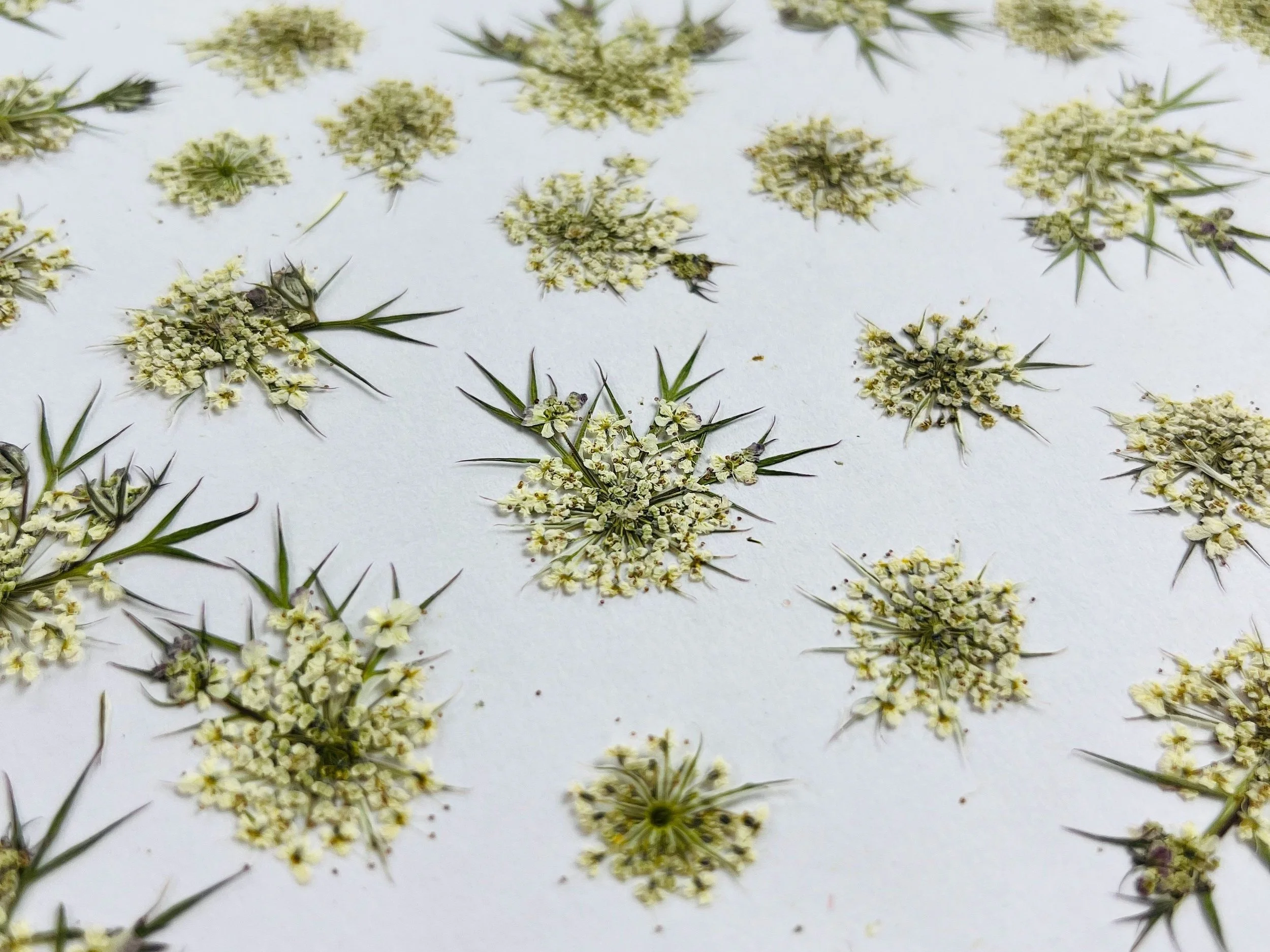
9. Queen Anne’s Lace (or Cow Parsley, Wild Carrot, Bishop’s Lace, Ammi Majus)
Why: Delicate white flowers that retain their shape and whiteness. Cut each white head from the main head of flowers and press each individually. They colour correct beautifully too (explore the guidebook on Colour Correction Methods for more on these techniques).
Best for: Filling spaces in compositions or for delicate projects. Try using each of the tiny white petals for jewellery. They are fantastic for winter projects too, as they can often resemble snowflakes.
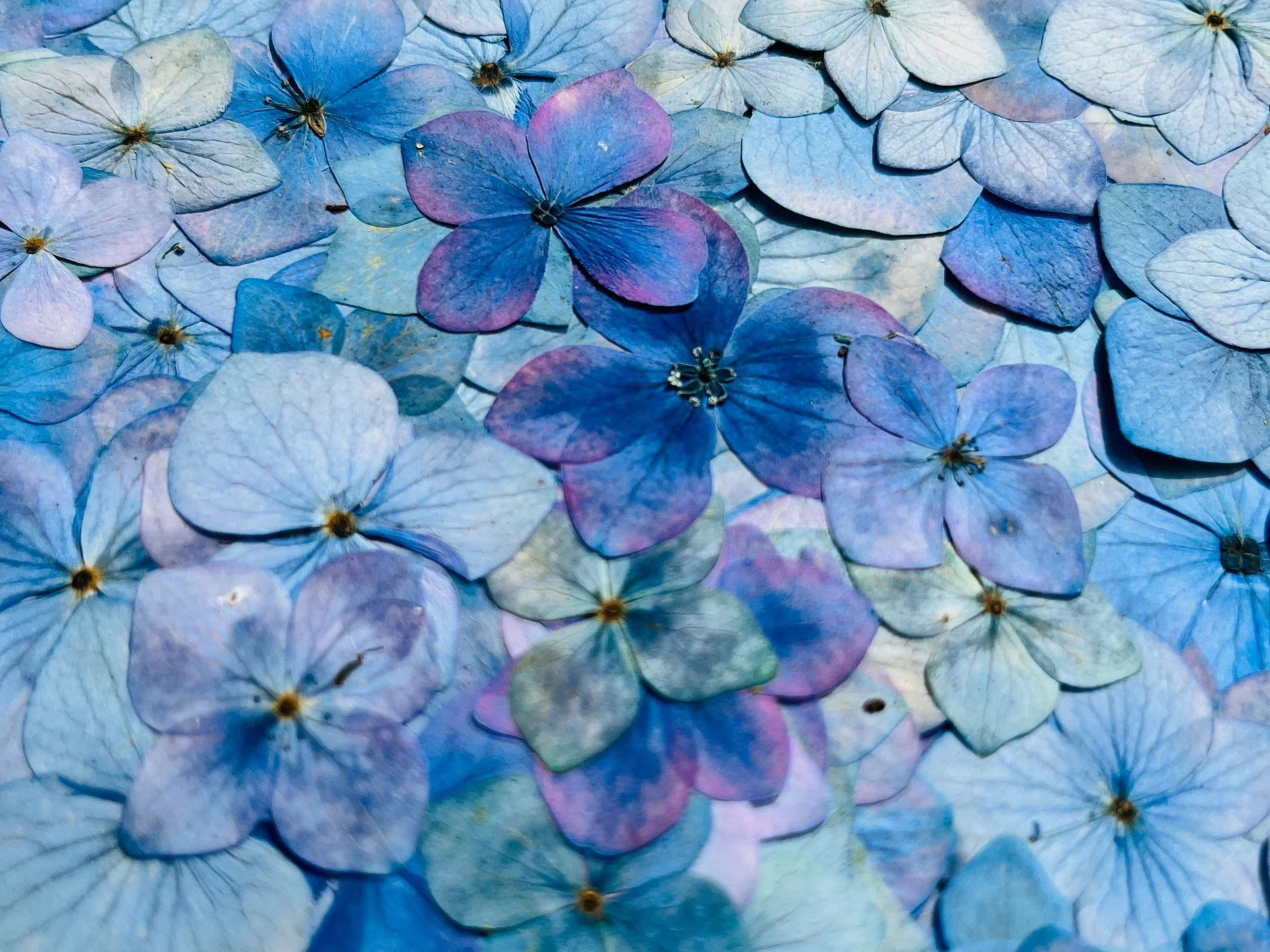
10. Hydrangeas
Why: Pretty blooms that come in a variety of beautiful shapes and colours; they are really easy to grow too. Their flowers can be pressed open-faced, showing off their gorgeous petals. Remove the inner little bud at the centre (this is the real flower, the colourful ‘petals’ are actually sepals) to achieve a more even press.
Best for: Pressed flower arrangements to fill spaces, bookmarks or greetings cards, or more delicate projects, such as in jewellery.
If you’ve enjoyed this blog, you can support my work here - thank you!
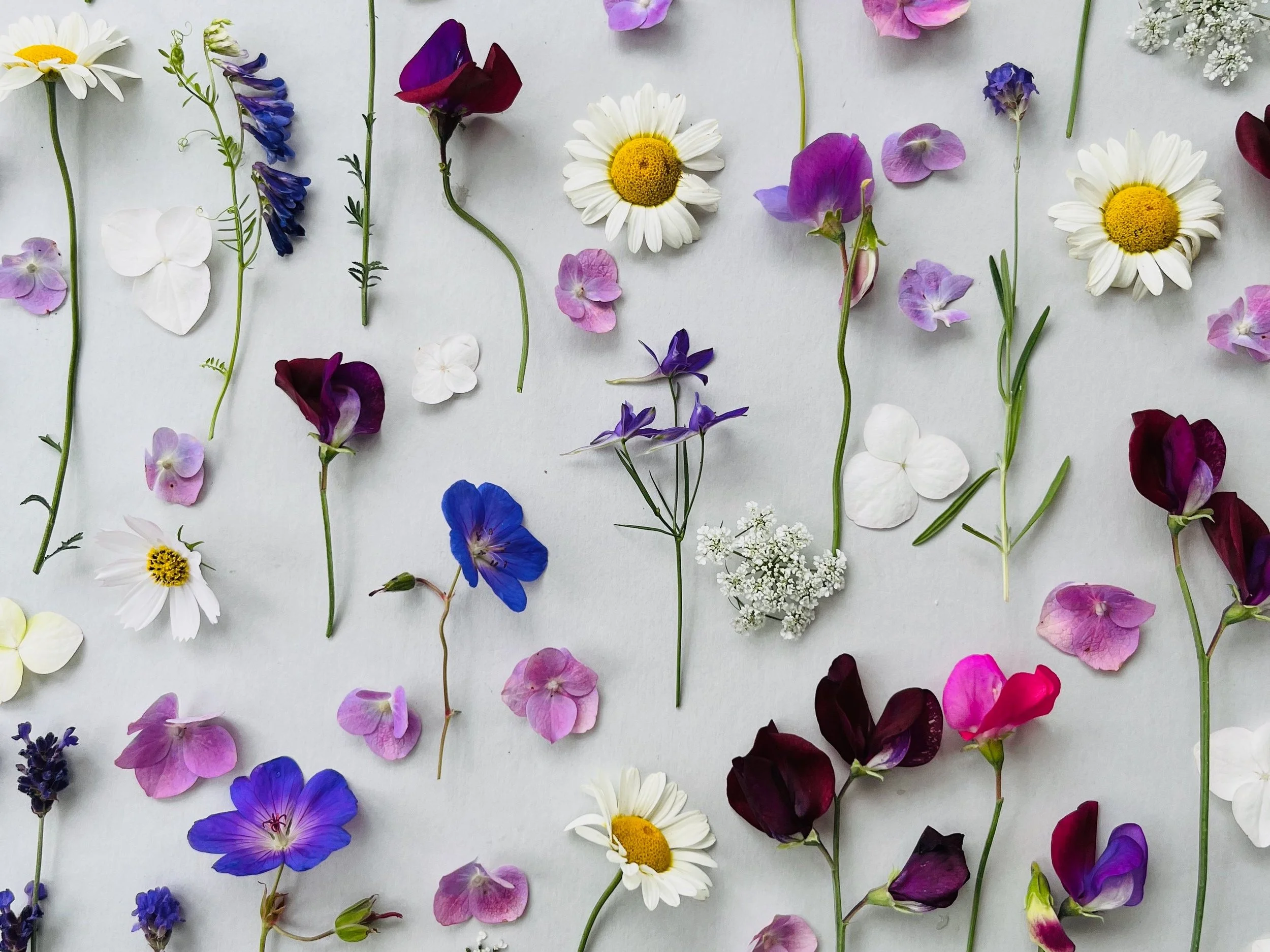
Some Other Great Flowers to Try:
Geum
Hellebore
Heather
Lavender
Heuchera
Geranium (Rozanne)
Viburnum (Japanese Snowball)
Spirea
Clematis
Lobelia
Aquilegia (Columbine)
3 Tips to get you Started in Pressing:
Harvest Time: Pick flowers on a dry day, after the morning dew has cleared. Avoid fresh flowers that are damaged, bruised or faded.
Method: The flowers recommended above press well in a traditional press, microwavable press or book (explore our blog post ‘Pressing Flowers in Books’ for more information). If you’re using a traditional press, place your flowers between your layers of paper - the most absorbent paper is blotting paper but our blog ‘Choosing a Press’ also has more information on what you can use to achieve the best results. Keep even, level pressure against them.
Drying Time: The time it takes for your flowers to completely dry can depend on what you’re pressing, what you’re using to press and the environment you are pressing in. Most of the flowers above will take between 2 and 4 weeks.
To Learn More about how to press flowers with detailed, step-by-step instructions to achieve consistent and beautiful results, explore our online courses and helpful guidebooks.
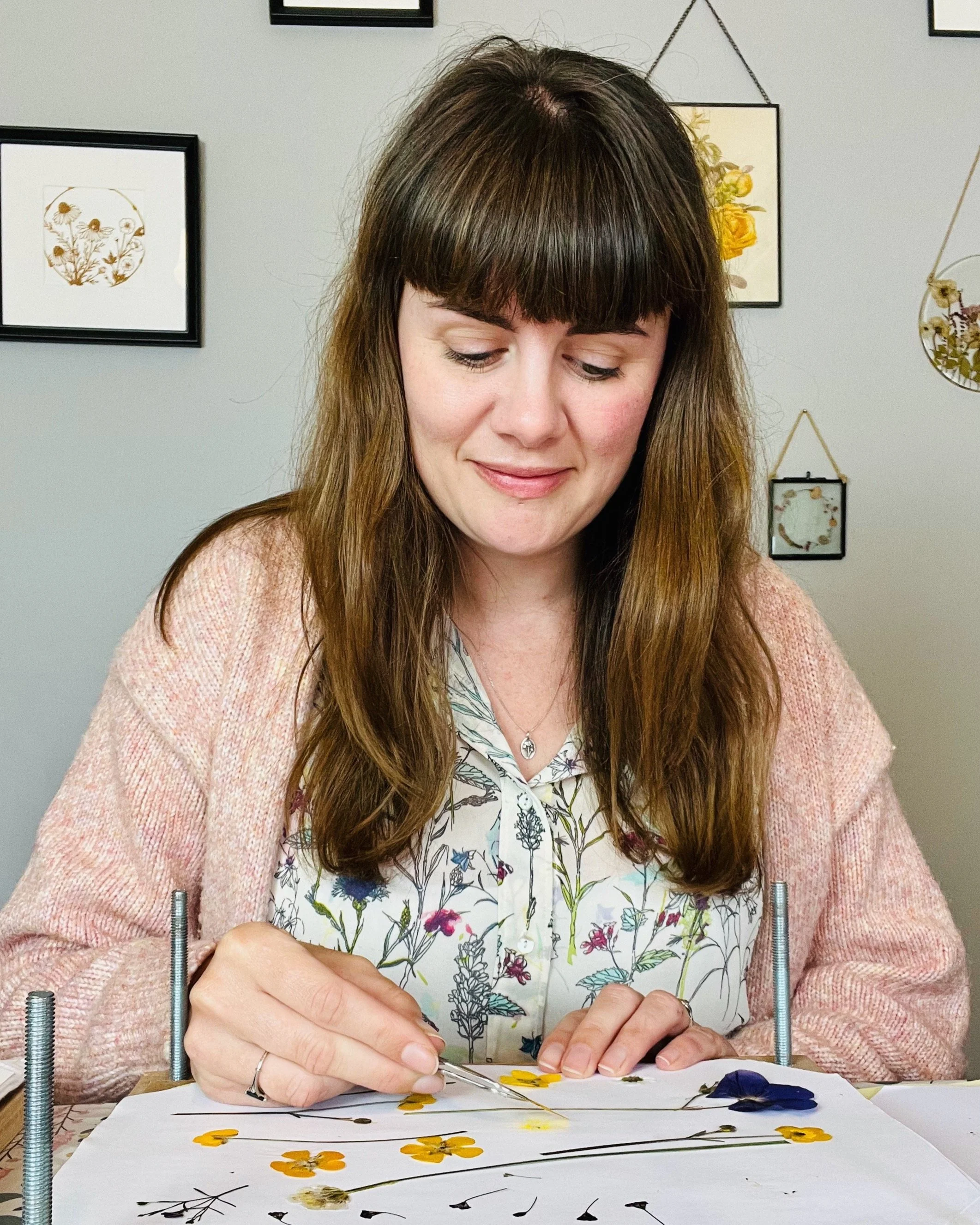
Ashton pressing flowers in a traditional press at her home in Cheshire.
