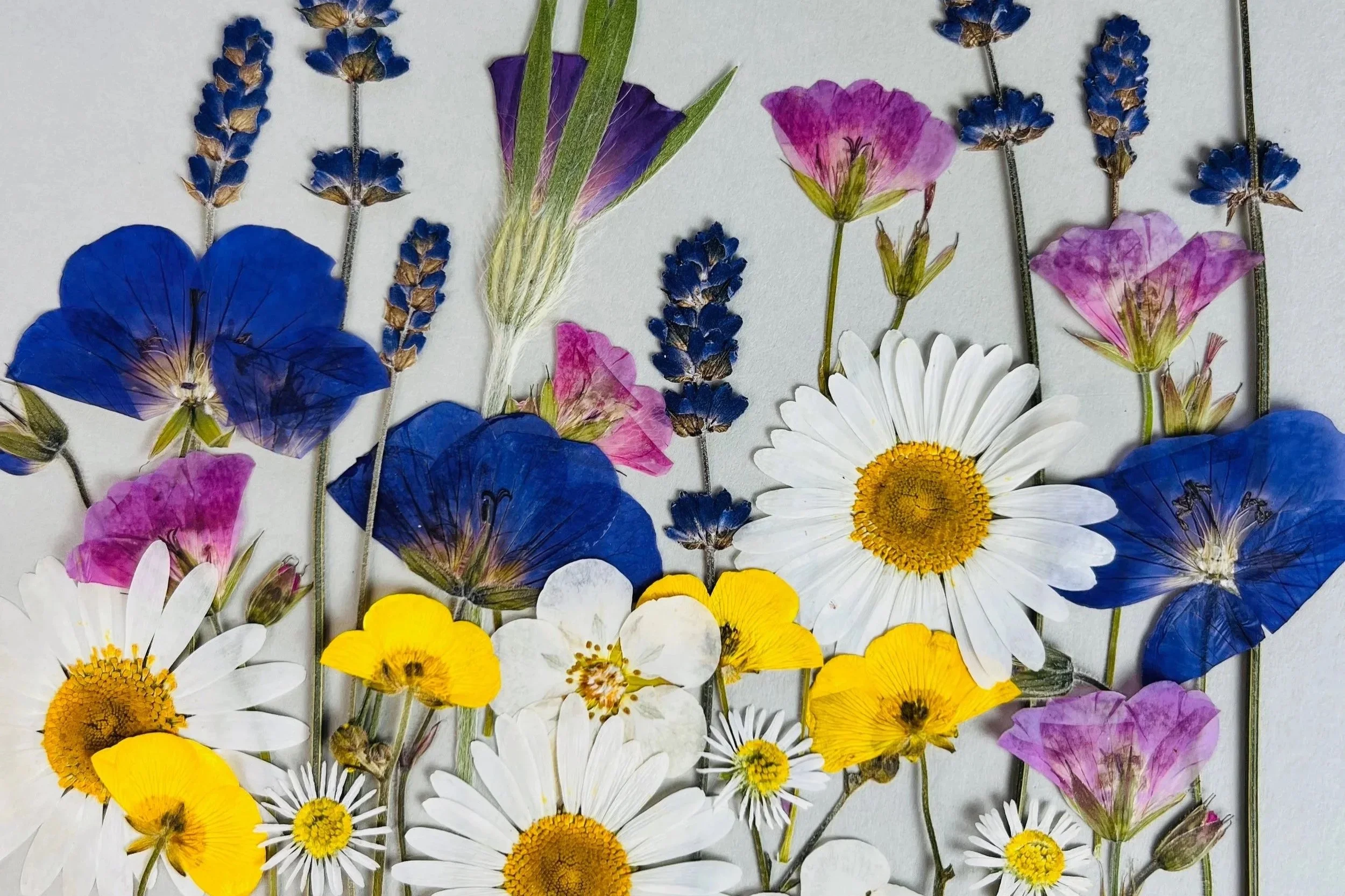
Why the Colour of Flowers Change During Pressing
Pressing flowers is a therapeutic and timeless way to preserve their delicate beauty, but one thing that surprises people is how much their colours can change during the process. While some flowers retain their vibrant hues, others can darken, fade or even completely transform into entirely different shades.
This natural phenomenon can occur due to chemical changes, moisture levels, temperature changes, and the effect of light and exposure to oxygen.
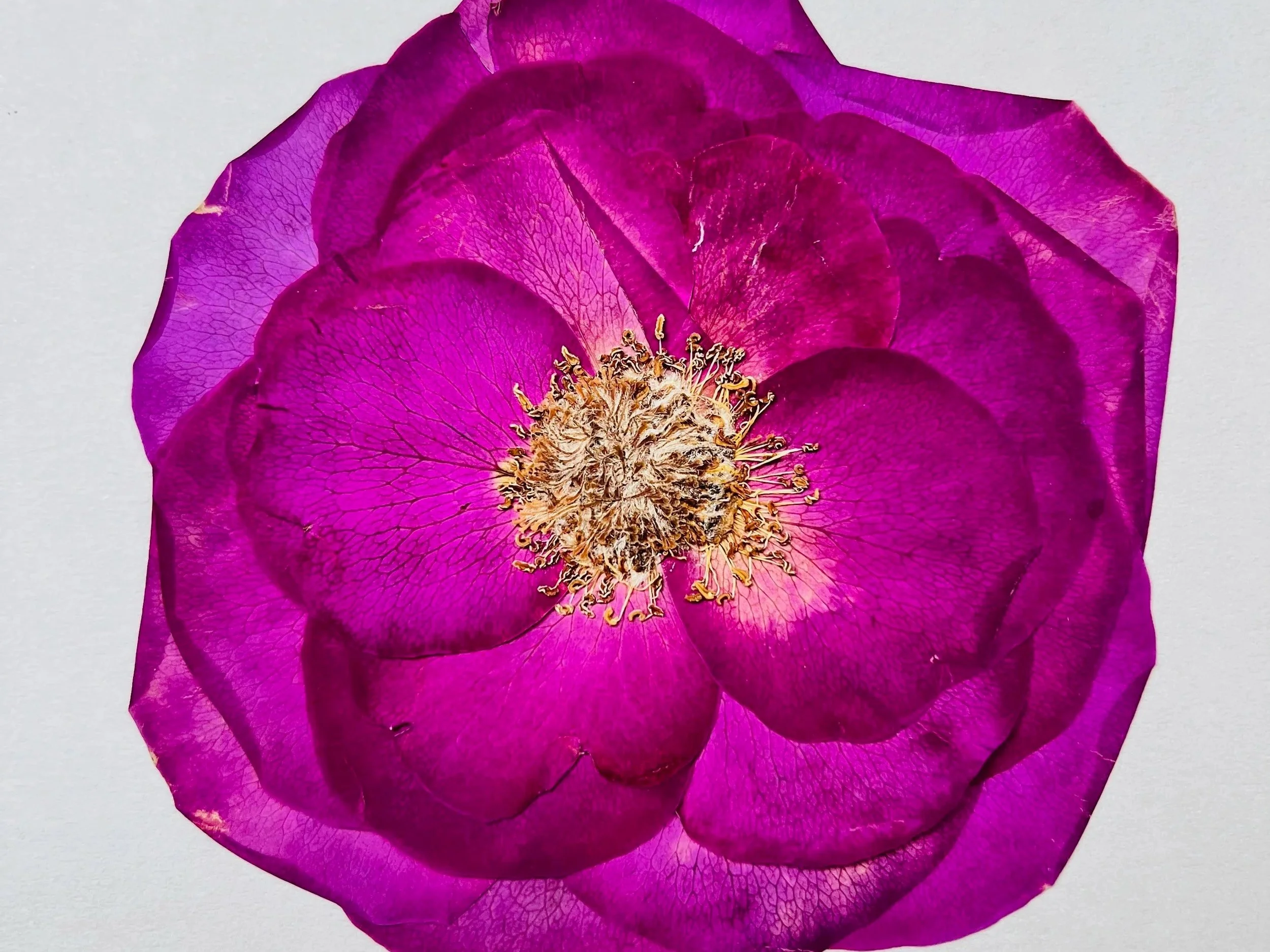
Understanding the Colour of Flowers:
Natural, fresh flowers acquire colour from pigments in their cells, which reflect sunlight and help us to observe this colour. These pigments are often suspended in fluid inside the cells of the flower, hence moisture levels play a role in the colour changes of a dried flower, which we’ll come to.
Chlorophyll is responsible for green; flavonoids (including anthocyanins) for white, red, blue and purple; and carotenoids are responsible for yellow, orange and red.
We’ve all observed the colour changes of leaves in autumn, from green to yellow, red and brown. This is due to the leaves having a mixture of these pigments present in their cells. As the temperature changes, the chlorophyll decomposes and other pigments are then reflected.
If your flower is vibrant and has a deep colour, it’s likely to have more pigments present in its cells compared to one which is lighter in colour.
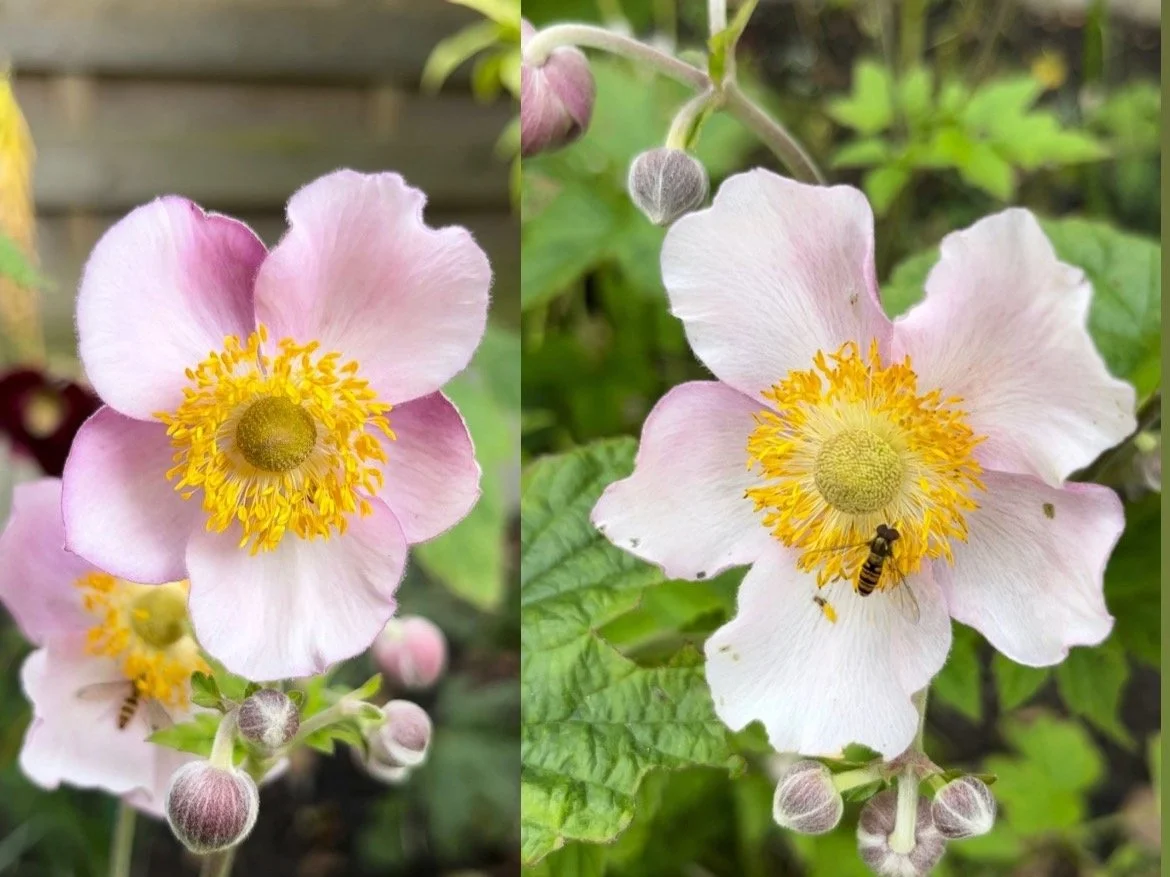
Why Do Pressed Flowers Change Colour?
Loss of Moisture:
The level of water present in a flower helps it to maintain its colour. If a natural flower is water-stressed, or dehydrated, you may notice changes to their colour. The same happens when you dry out a flower. The lack of water can degrade the pigments present in the flower’s cell, which can cause it to fade, darken or even change colour completely.
Effect of Light Exposure:
Light can contribute to the breakdown in pigments over time, causing some pressed flowers to fade. Delicate whites, pastels or pale-coloured flowers may become yellowed or translucent when pressed.
Oxidation Reactions:
Just as a cut apple browns when exposed to air, some flower pigments can react with oxygen, leading to a darker or more muted colour. Flowers rich in anthocyanin, such as red roses or violets, are particularly susceptible to oxidation and may turn brown or a deeper burgundy or purple.
Temperature and Pressing Method:
The method you use to press your flowers can affect how their colour changes. Extracting moisture quickly, but gently, can help to retain colour; speeding up the drying process and reducing oxidation will help to preserve vibrant hues. Likewise, the environment you press in can also contribute. Warm, dry environments help speed up the drying process, whereas humid environments will prolong it. For more detailed, specific information on methods of pressing, see our Courses and Guidebooks.
pH Sensitivity:
Some flower pigments are highly sensitive to changes in pH levels. For example, hydrangeas, which can change colour based on soil acidity, and this may also contribute to colour changes when they are pressed. Flowers with anthocyanin, such as bluebells or pansies, can turn redder in acidic environments and bluer in alkaline ones.
Common Colour Changes in Pressed Flowers
Red Flowers
Red flowers, such as fuchsia, roses, tulips and poppies can begin a deep, vibrant red. As the flower is exposed to light and oxygen, the anthocyanin pigment degrades, which can cause the colour to darken, becoming more burgundy, purple or brownish.

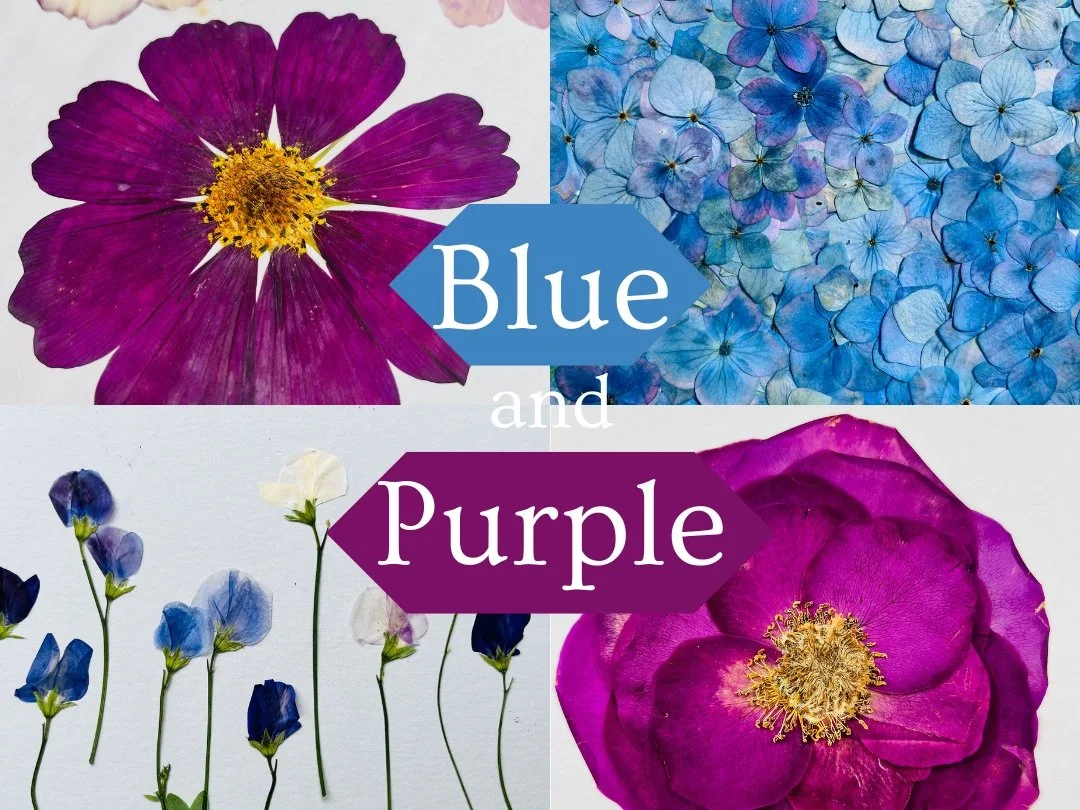
Blue and Purple Flowers
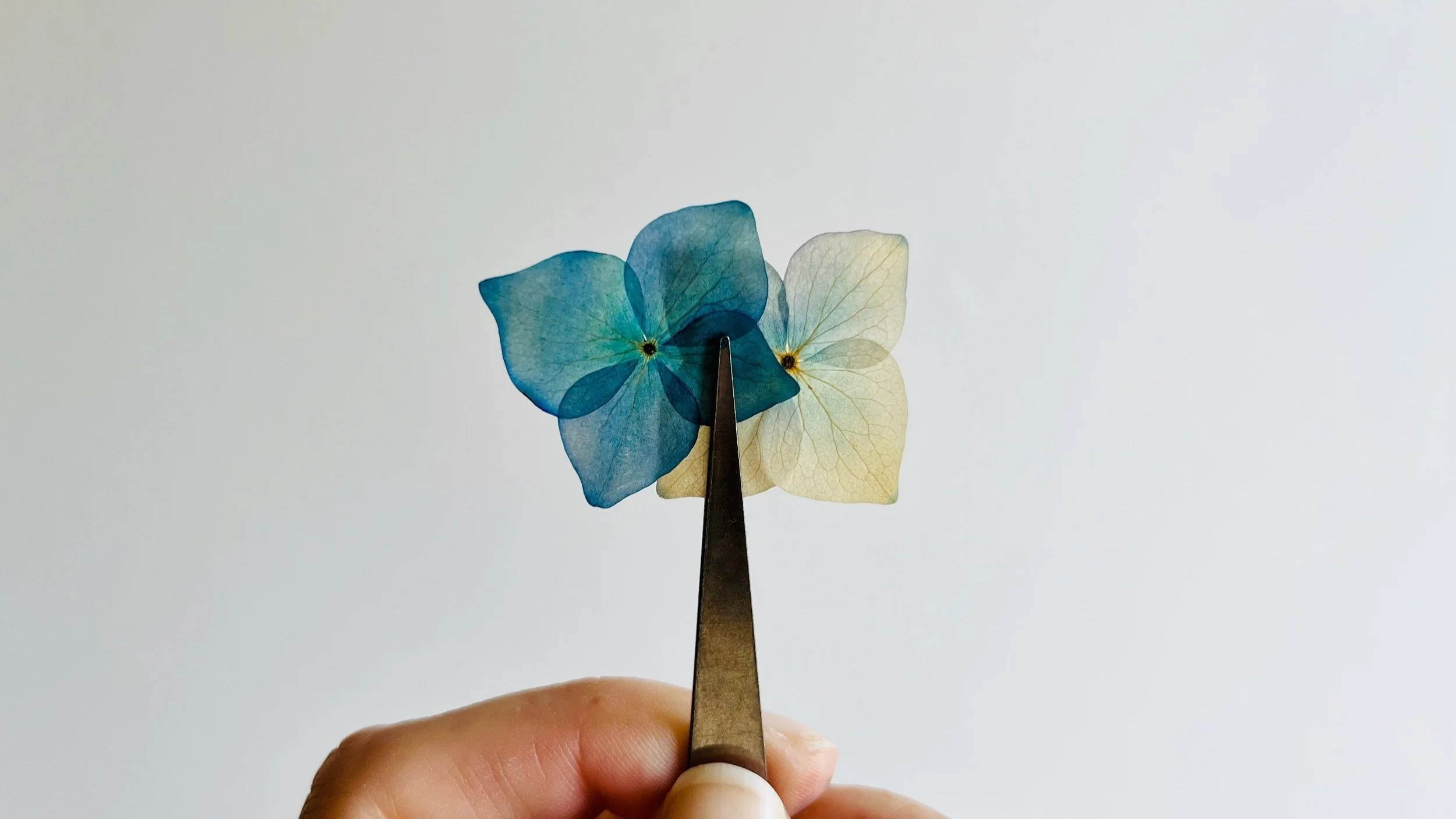
These colours are a strong choice for pressing as they often retain their vibrancy quite well. The flavonoid pigments in them are much more stable and this can make them less prone to fading too. Often these colours can have undertones of yellow or green in them, which can become more present once pressed.
White and Yellow Flowers
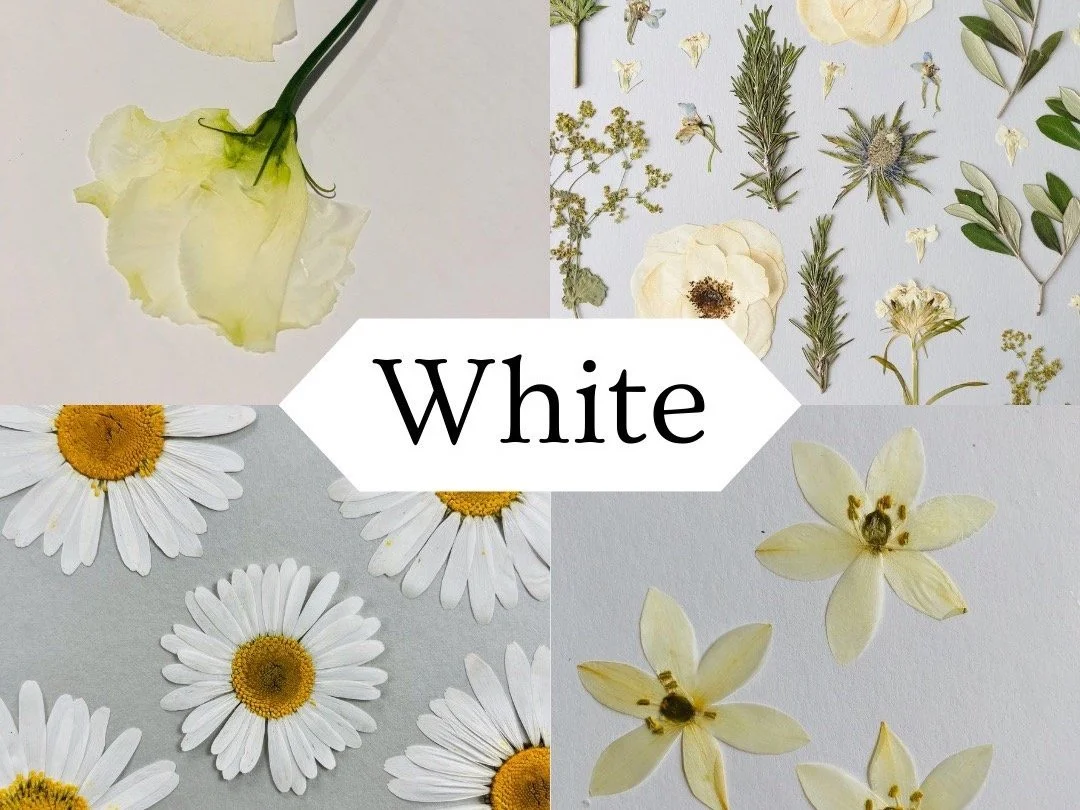
White is notoriously difficult to retain in pressing. Natural, fresh white flowers, such as lilies, chrysanthemum, lisianthus and daisies, often have undertones of ivory, yellow and green in them, which they can turn to during the pressing process. As their pigment deteriorates, so too does their colour.
Pink Flowers
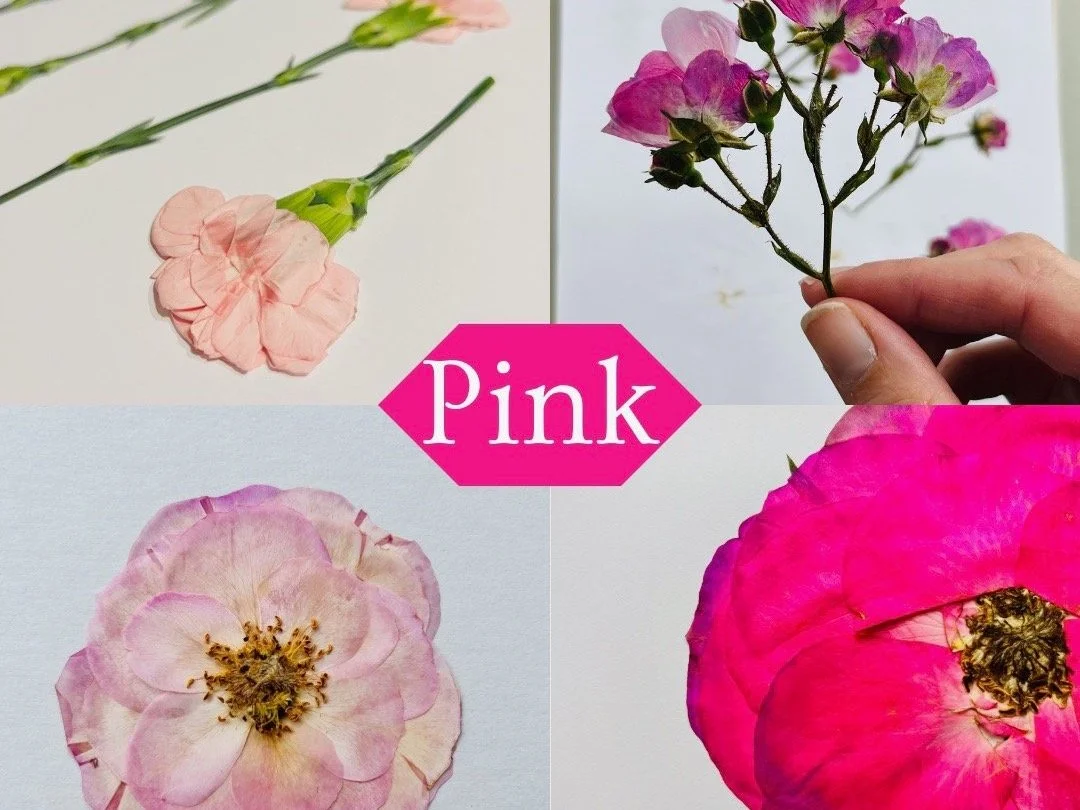
Like white flowers, pink can be a tricky colour to retain in flower pressing. The lighter the pink, the more likely it will fade, become translucent or change to a brownish colour. Quite often pink will transform to purple in the press as the pigments deteriorate. Just as happens with red flowers, the anthocyanin pigment responsible for pink is sensitive to light and oxygen.
Yellow and Orange Flowers
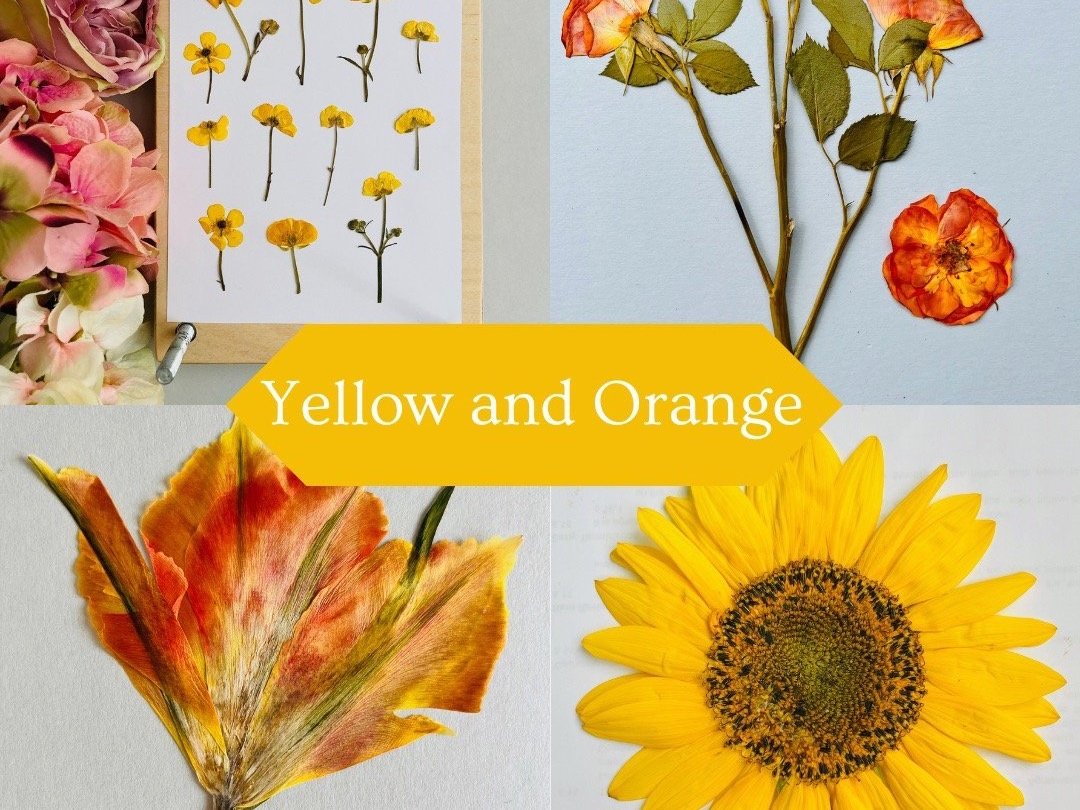
Yellows and Oranges are a common natural colour and can be vibrant and strong in nature, such as marigolds, sunflowers and buttercups. Their strong pigments withstand the pressing process well, though some will deepen over time.
Tips on Preserving Colour in Flower Pressing
Choose Flowers in their Prime:
Younger flowers are often not fully established in colour yet, whereas older ones will be changing and fading. Read the blog ‘Picking a Flower for Pressing’ for more detailed information on how when you pick a flower can affect your pressing.
Press Flowers Quickly but Gently:
The sooner you press, the better the colour will be. Minimise your handling of the flowers to prevent bruises and damage, and limit the time they’re out of the press to stop them wilting. Allow plenty of space between your flowers when pressing to allow moisture to escape. For more specific, detailed guidance on flower pressing, see our Courses and Guidebooks.
Use Absorbent Papers:
Blotting paper is the most absorbent paper to use and will help to extract moisture quickly. Avoid parchment paper, which can trap moisture and lead to browning and mould. For more detail on presses and papers, read our blog, ‘Choosing a Flower Press’.
Avoid Direct Sunlight:
Display pressed flowers away from direct sunlight. Store your pressed flowers somewhere dark and dry to prevent them from fading. Information on storage is also available in our Courses and Guidebooks.
Experiment:
If you’re able to, examine or observe your fresh flowers or the plant before pressing. You can usually tell what colour a flower will change to as it ages over time.
Some flowers retain their colour a lot better than others depending on the composition of their pigments and the characteristics of their structure. Often pressing can depend on a multitude of factors, which you learn as you press.
A useful tool to have in the flower presser’s arsenal is colour correcting (also known as colour enhancing, tinting or augmentation), particularly when preserving sentimental flowers where colour can hold deeper significance. To learn more about colour correction methods, see our Guidebook: ‘How to Colour Correct Preserved Flowers’ or the Course
Final Thoughts
The way flowers change during pressing is often a fascinating part of the process and can present unique and unexpected results. It’s part of the beauty of the process.
It’s important to remember, flowers are organic matter, which often makes them transient; preserving them does not suspend them in time and they can have their own minds when it comes to preserving them.
Understanding this, alongside how colours shift and transform, will help you to gain the best results in your flower pressing. While some changes are inevitable, using the right methods and techniques can help to maintain vibrant hues and keep pressed flowers looking stunning for years to come.
If you’ve enjoyed this blog, you can support my work here - thank you!