How Long Does it Take for Flowers to Dry?
One of the questions I’m asked most often is, “How long does it take for a flower to dry?”
It’s a simple question, but the answer is not so straightforward. Pressing flowers is not an exact science but beautiful and well-defined results can depend on a multitude of factors. Some blooms release their moisture quickly, whereas others take their time.
Below, I’ll walk you through some of these factors, with some tips on how to know when your flowers are ready.
The Short Answer
Most flowers take between one and four weeks to dry in a traditional press. I always recommend a minimum of two weeks, just to be sure.
However, - and this is important - the type of flower, its thickness, the time of year, the methods and equipment that you are using, and even the weather can affect this timeline.
What Affects the Drying Time?
Flower thickness
Flat-faced flowers like primroses, violas and cosmos dry quickly, sometimes in as little as seven days. If you are a beginner presser, look for single-petalled flowers as they are more likely to give you quick, successful results that can be a real confidence boost when you are first learning to press.
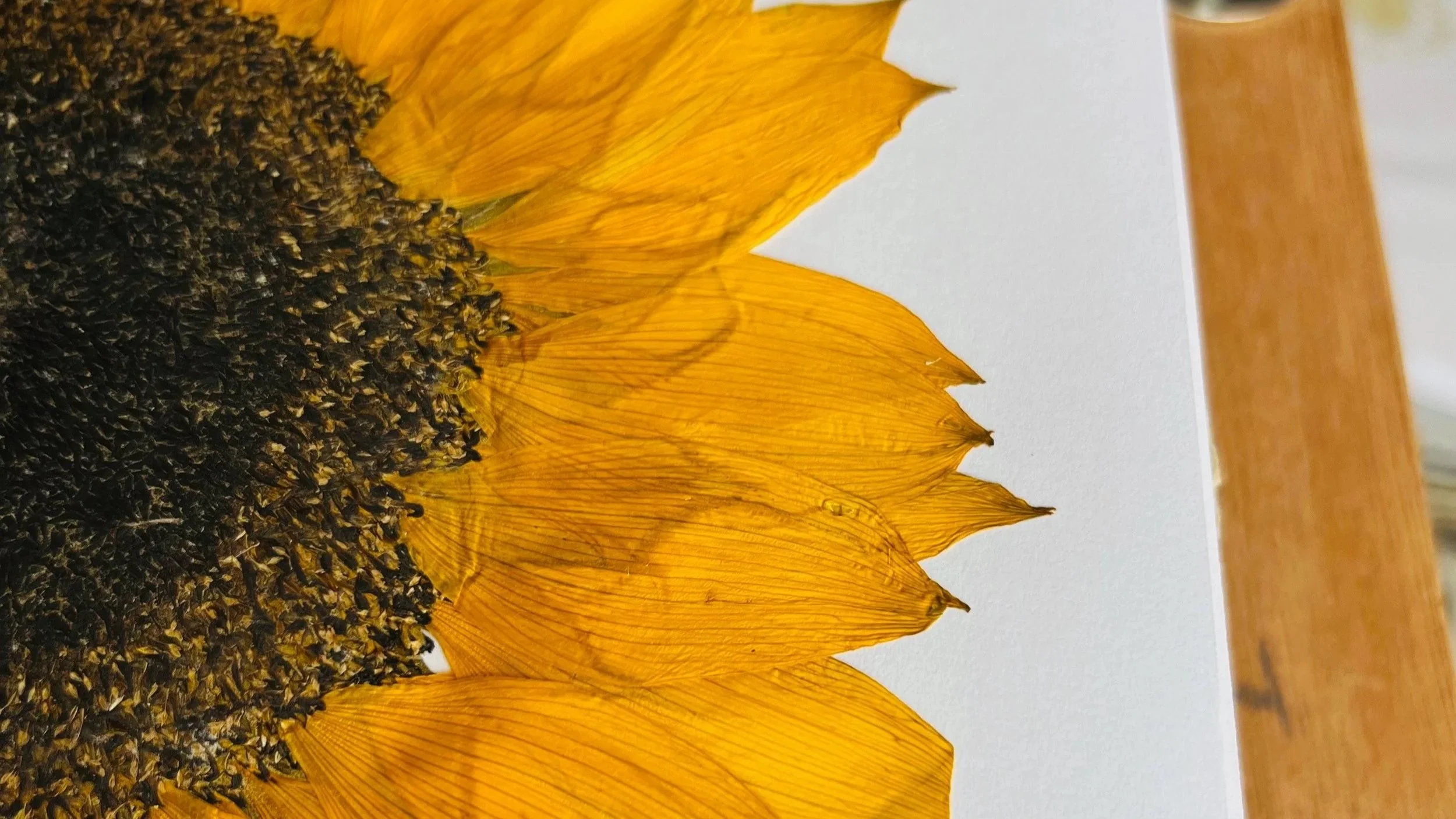
Thicker, denser flowers such as roses, ranunculus, sunflowers and peonies require longer in the press, sometimes four to six weeks or more. They will need a lot of babysitting during the process and can be temperamental.
Moisture levels
A flower picked on or after a rainy day will hold more moisture and some can become water stressed after heavy rain. This moisture in the flower is more likely to lead to browning and potentially mould. Likewise, a flower picked after a period of draught can be dehydrated and is more likely to lose its colour and shape.
Try picking a flower that is sufficiently watered (look for blooms in their prime; they should be vibrant and hold their shape well). Pick after the morning dew has evaporated.
Season
During the cooler months, flowers may need much longer in the press. Whereas, in the summer, when it’s warmer and drier, you may find that the flowers dry quickly.
Keep an eye on the humidity levels in the environment you press in, as humidity can affect the rate at which your flower presses, too.
How you prepare the flower
A little trimming, shaping, or separating petals can make a big difference to your drying time. I explore this in much greater detail in my online courses and guidebooks.
Equipment and Technique
What you use to press your flower and the methods and techniques you employ, will all affect the pressing process and how quickly your flower presses. You can learn more about equipment in my blog, ‘Choosing a Flower Press'.
Knowing When a Flower is Fully Dry
This is the part that becomes instinctive with practice.
A flower is ready to be removed from the press when it feels papery, cool and dry, and completely flat.
Patience is part of the craft! I explore specific techniques in knowing when a flower is dry in my online courses and guidebooks.
A Few Quick Tips
These won’t replace the full methods I teach in my courses, but they will help to get you started:
Choose flowers at their finest - not bruised, damaged, browning or fading.
Avoid anything damp (rain, dew, or vase water).
Press promptly after picking - and if you’re not ready to press them yet, there’s some tips in my blog.
Trust your hands and eyes - they’ll tell you more than a timer ever could!