

Picking a Flower for Pressing
Did you know the outcome of pressing your flower begins as early as when you pick it?
Too mature and it could brown or fade more rapidly; too underdeveloped and it may not retain its shape or colour; too wet and it’s more susceptible to browning and mould; too dehydrated and it’s likely to wither and brown.
When you pick your flower can be as important as the process of pressing it.
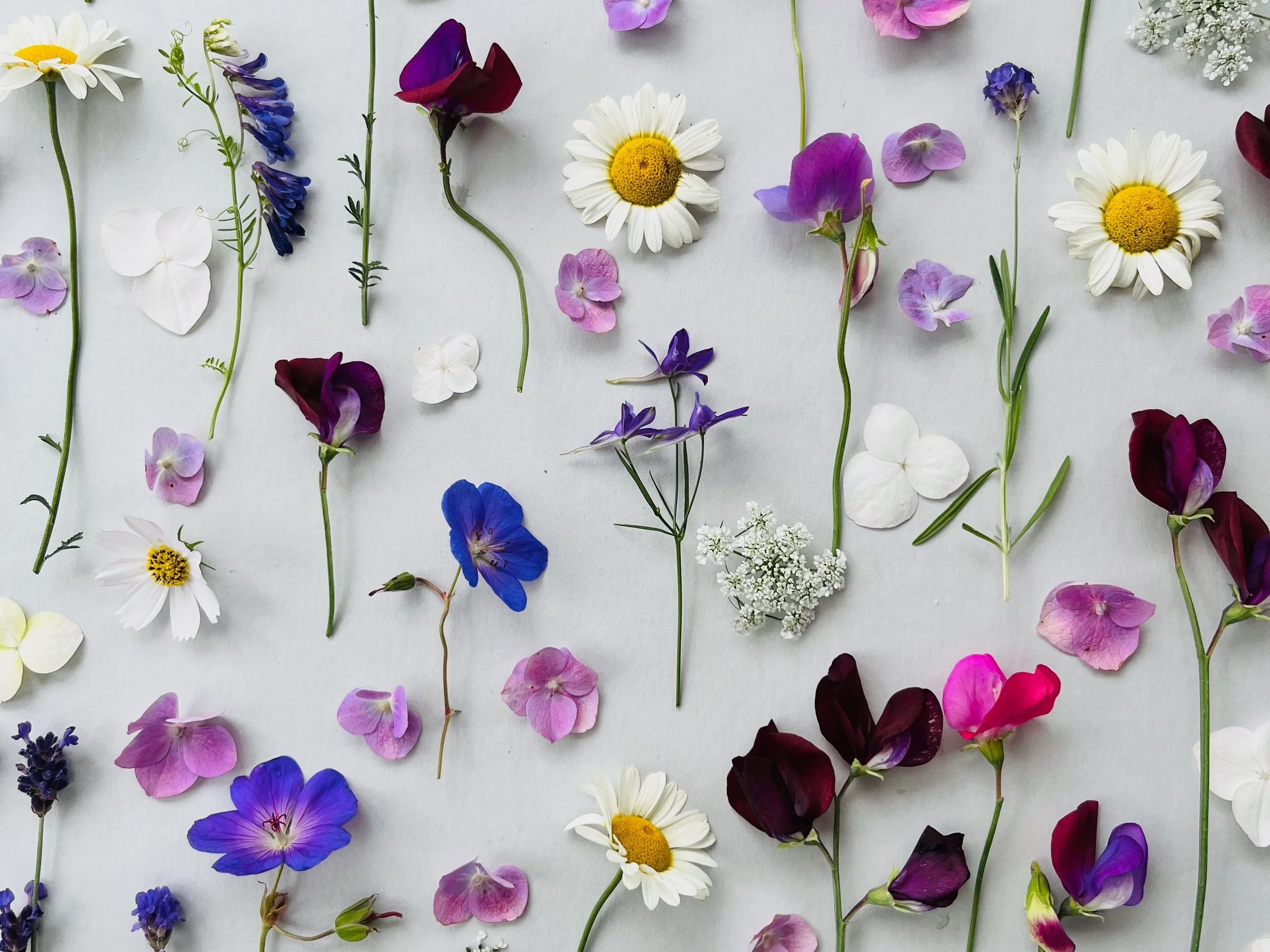
Does the time of day matter?
Let’s look at this from the technical perspective first… a bit of science can help us to understand our flowers and in turn will aid us in getting the best results from preserving them.
During the day, a plant’s leaf pores (stomata) are open, which also assists the process of transpiration (how a plant takes on water and carbon dioxide, and releases oxygen) and the evaporation of water, which also helps it to stay cool. A flower needs this hydration and it’s particularly important to pressing too.
At night, a plant will take on less water; they will have also stored up their carbohydrates providing a food reserve overnight. Like humans, plants are also influenced by light and temperature; some are nyctinastic, which means they close up at night.
The flower of a plant is usually at its best (and ripe for picking for pressing) in the morning, after the morning dew or any surface water has evaporated; or in the late evening, if they’re not nyctinastic and haven’t closed up.
When a plant or flower is turgid (filled with water), it is fuelled with minerals and well-hydrated. Thus it is firmer, is at the peak of its structure and is therefore more likely to retain its shape and survive the preservation process.
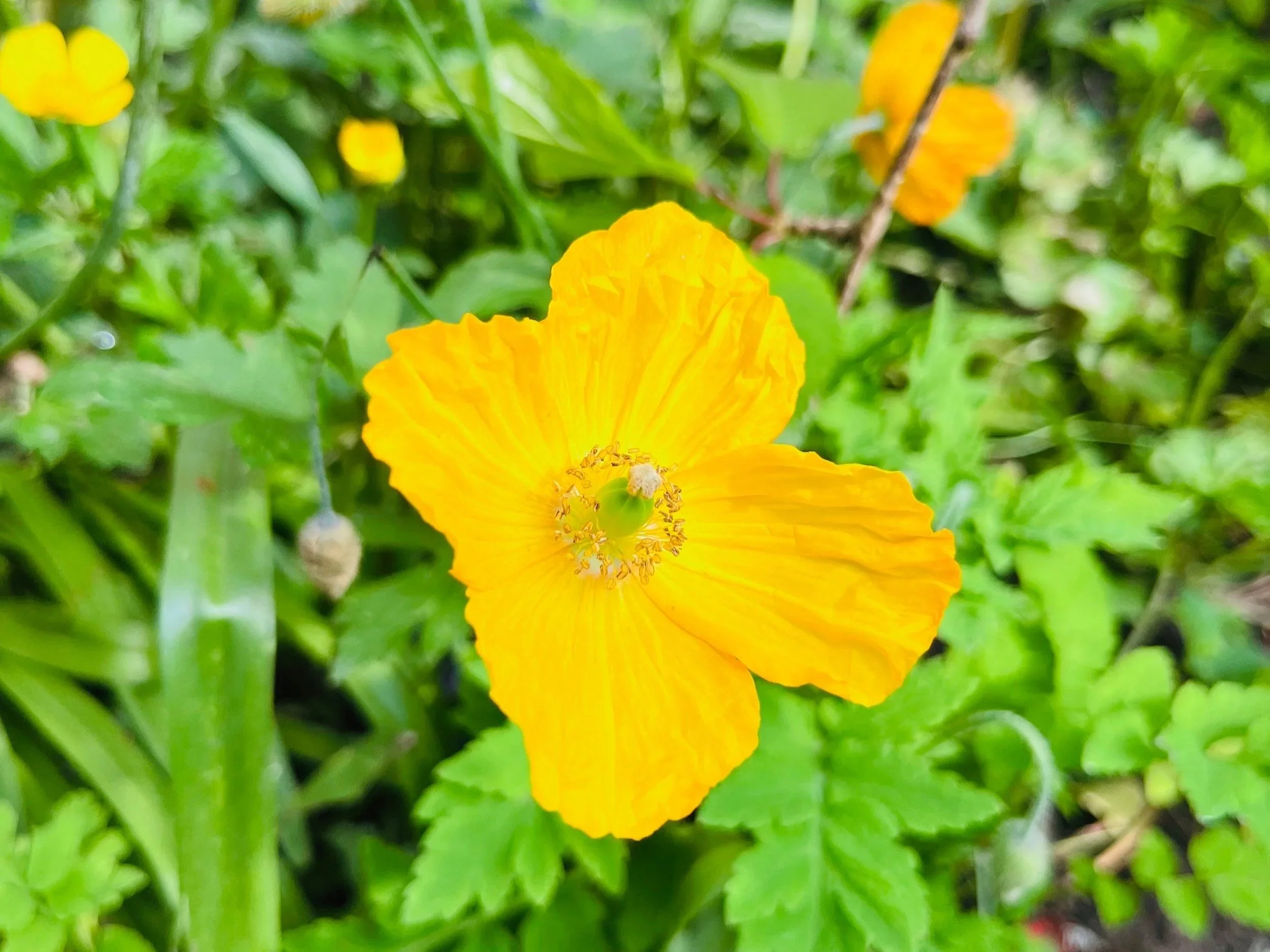
How about the weather or environment?
The environment and conditions your flower is growing in can greatly affect the pressing outcome too.
If the conditions are too wet, flowers are likely to retain a lot of water. It’s important to avoid pressing flowers that are saturated - particularly with surface water - as this will lead to browning and increase the likelihood of mould in your press.
The receptacle of a flower (where the stem joins the sepals or petals) are often one of the trickiest areas to press; they’re thick and often filled with fluid. The same is often true of thick stems too. When it’s rained a lot, these parts of the flower can quickly fill up. Even if you’re picking on a dry day, if it’s rained heavily the day before, your flowers may be water-stressed. If you press flowers that are water-stressed they’re going to take much longer to dry and are more susceptible to mould and browning. Cutting stems in half before pressing can help to reduce the bulk in your press, encouraging them to dry out.
As well as it being too wet, if the conditions are too warm or dry, this will also affect the way in which your flowers press. It may seem a bit counterintuitive- an already dry flower should dry out better in a press, right? Wrong!
Dehydrated flowers will quickly lose their shape, wilting and even browning due to stress. If you place a dehydrated flower into your press, you’re likely to find it will brown.
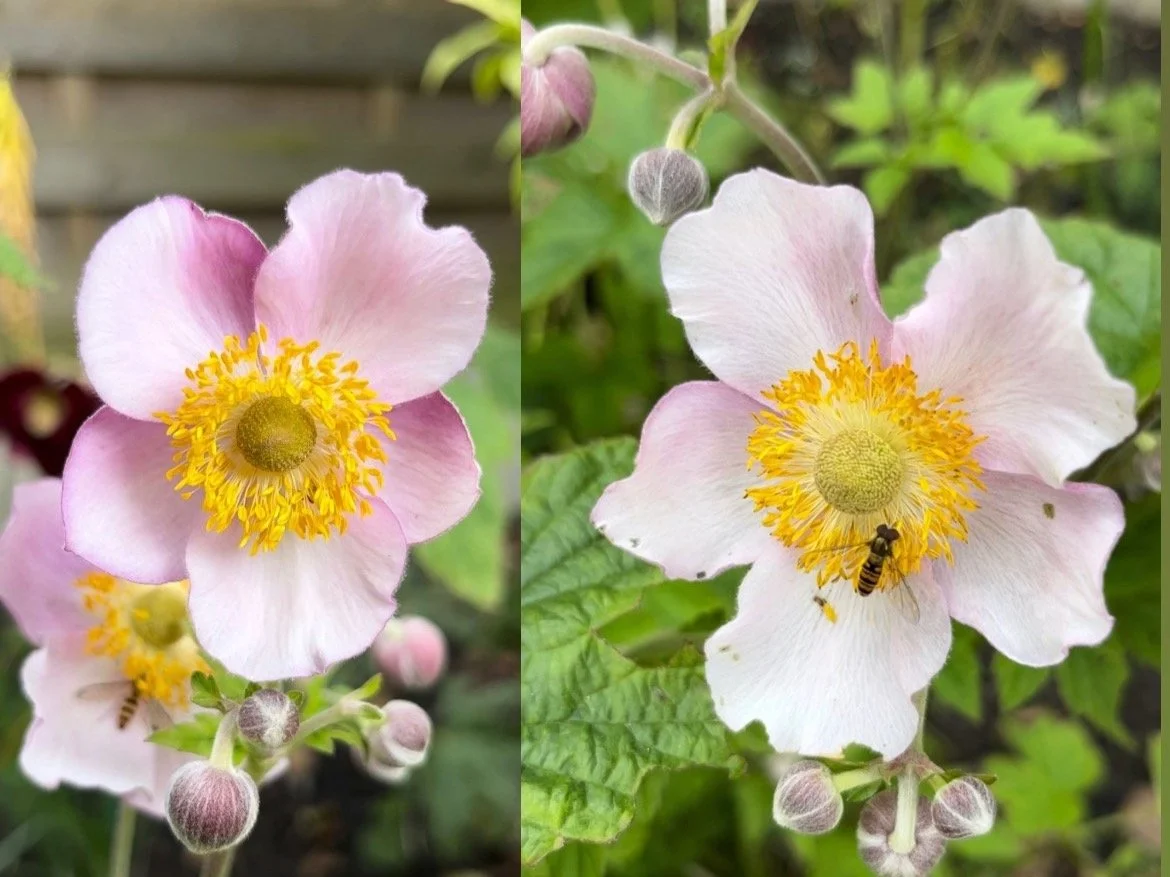
Does the lifecycle of a flower affect the outcome of pressing?
The simple answer to this question is yes.
Flowers are best picked and pressed when they’re in their prime!
I explore more about the importance of the lifecycle of a flower for picking and pressing in my online courses and guidebooks.
Not ready to press them yet?
If you’re out and about picking flowers for your press, and you don’t have a travel-press to hand, then your flowers are more likely to wilt and not be in the best condition for pressing. (See the blog post ‘Choosing Flowers for your Press’ for more guidance on picking wild flowers).
Here’s what you can do if you’re out and about picking flowers:
keep stems attached to flowers to prolong turgidity and prevent wilting,
place your flowers in a plastic bag with a small piece of damp paper towel in the bottom to keep them hydrated,
if you’re travelling in a car, keep flowers in the footwell (the coolest place),
once home, you can place your flowers in the bottom of a fridge to keep them cool if you’re not ready to press them yet,
if they’re wilted, rehydrate them if you can (remove any foliage from the stems, trim the end of the stems and place them in a vase or jar of clean, fresh water for a couple of hours).
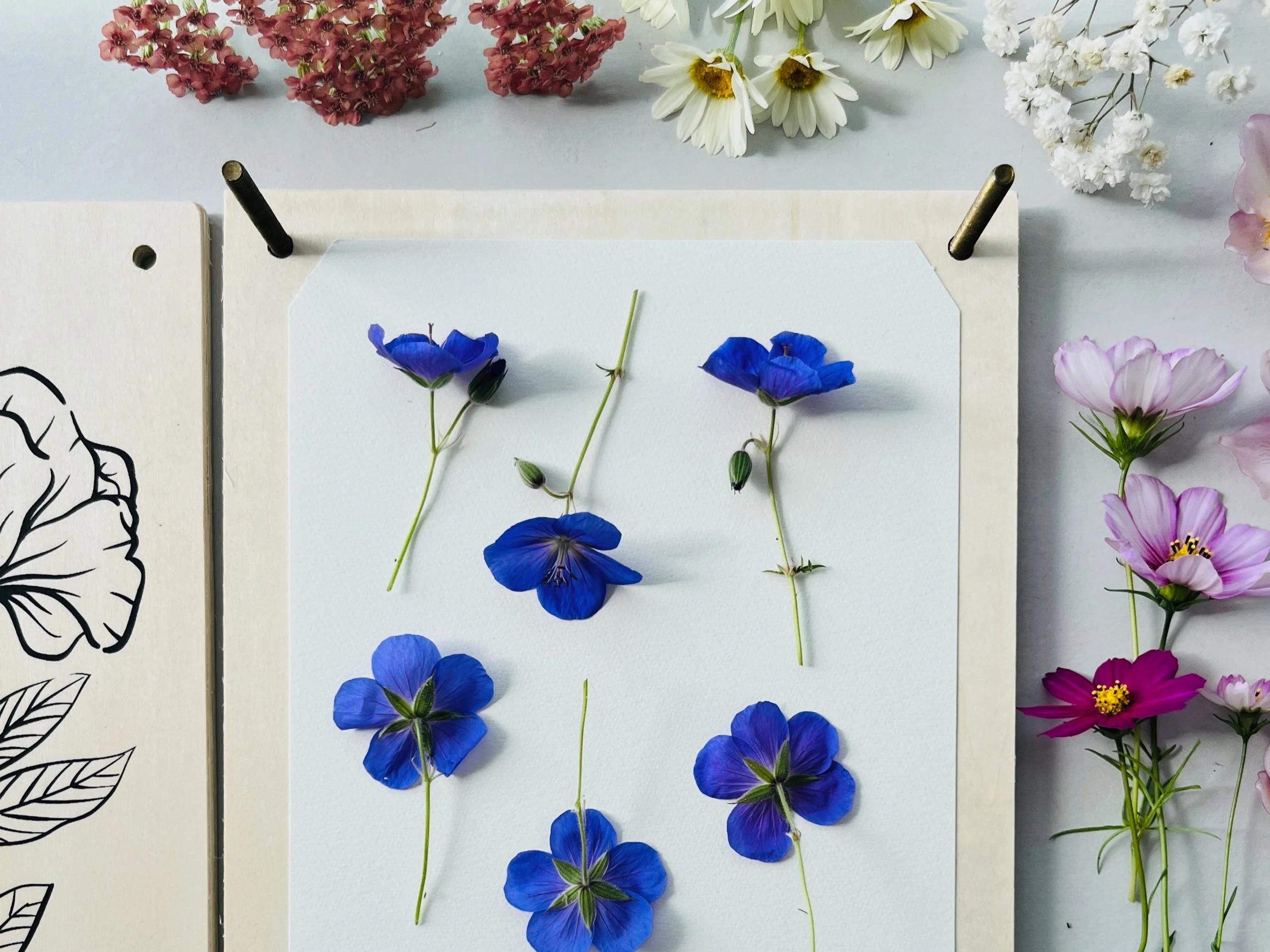
How do I press flowers?
If you’re looking for more advice on the process and methods of flower-pressing, explore our online courses and guidebooks. Jam-packed with information including:
choosing your flowers and preparing them for pressing,
methods of pressing, including pressing thicker flowers such as roses,
how to retain colour and shape, and reduce browning and mould,
storing your pressed flowers to protect them and prolong them,
deconstructing and reconstructing flowers,
and how to colour correct them.
Delve into the wonderful world of flower pressing and learn a truly beautiful skill.
If you’ve enjoyed this blog, you can support my work here - thank you!
