

The Significance of Forget-me-nots
Delicate, sky-blue, and easily overlooked as weeds! Forget-me-nots may be small in size but they carry profound meaning across cultures. For many, this humble flower is more than a dainty addition to the garden; it’s a symbol of remembrance, love, and enduring connection.
To learn more about pressing this pretty bloom, scroll to the end of this post.
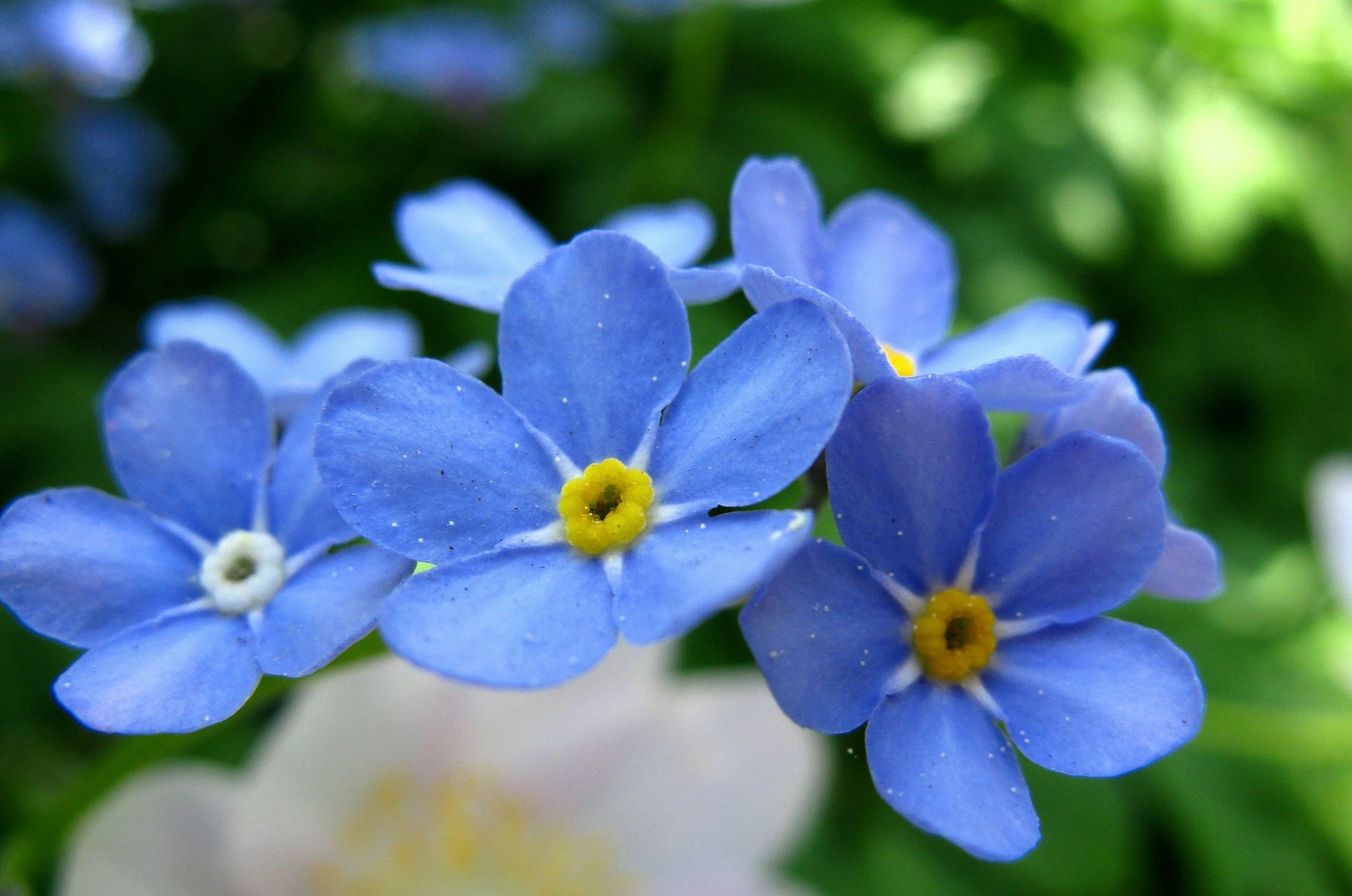
A Name that Speaks Volumes
Myosotis is known by many names: Mouse’s Ear, due to the velvety soft foliage resembling a mouse’s ear; Scorpion Grass, because the rolled buds resemble a scorpion’s tail; but most notably it is known as Forget-me-not.
The latter name is both a request not to be forgotten and a promise never to forget. The flower is represented in many cultures, but the name ‘Forget-me-not’ is possibly from a Medieval German tale in which a knight, while picking the flowers for his beloved from a river bank, fell into the water. Due to the weight of his armour and the strength of the current, he was swept away, and as he was drowning he tossed the flowers to her and cried, “forget me not!”.
This sentimental story has captured the hearts of many over the centuries and formed the flower’s association with remembrance and enduring love.
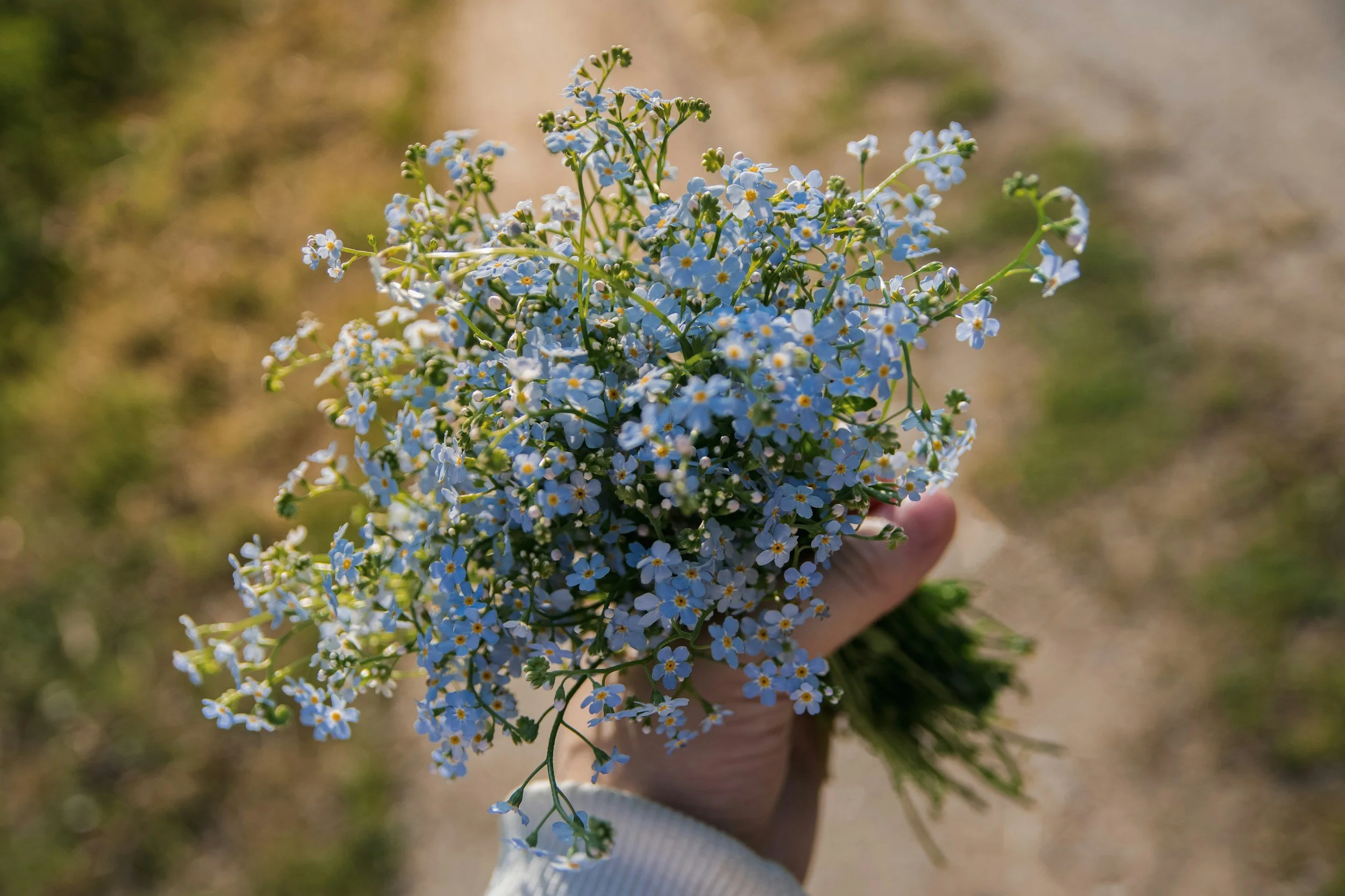
Symbolism Through the Ages
Over the centuries, forget-me-nots have held a number of symbolic meanings:
Eternal Love: Whether romantic or platonic, these dainty blue flowers represent a love that transcends time.
Memory and Remembrance: Often forget-me-not seeds are given out at funerals, or they are planted in memory of someone; honouring lost loved ones. They are emblematic of remembrance and memory, including an association with Alzheimer’s and Dementia Awareness.
Fidelity and Loyalty: Forget-me-nots are an enduring flower which mirrors steadfast commitment and makes them a popular symbol in literature about faithfulness.
Cultural and Historical Connections
In Victorian Floriography (also known as ‘The Language and Sentiment of Flowers’), forget-me-nots often conveyed the hidden message: “You are not forgotten.” In an age of emotional repression, they were given to secretly express enduring love, fidelity and remembrance. Flower pressing was very fashionable at the time and dried flowers would be included in letters or tokens of affection. Pressed forget-me-nots would have been a sentimental symbol of lasting love, whether romantic or platonic.
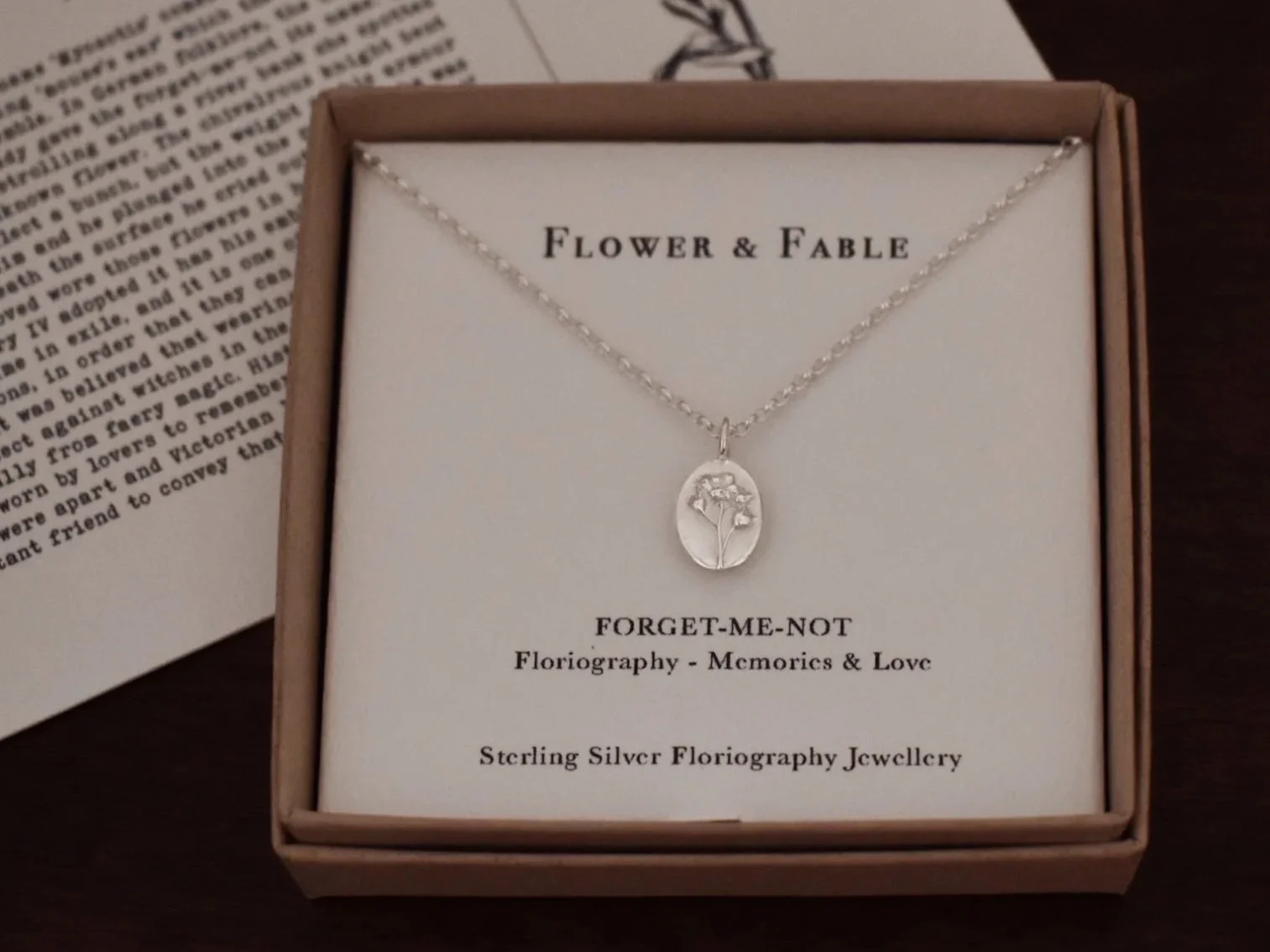
Image Courtesy of ‘Flower and Fable’
Personal Sentiments
For me, forget-me-nots are a sentimental emblem too, and a reminder of loved ones. They have always grown prolifically in my Nan’s garden, which is where I press most of mine. A few years ago I took some of her plants and planted them in my own garden; now they’ve spread so I have a ready abundance in Spring for pressing. In 2015, my grandad passed away from dementia too, so they hold an especial meaning due to the Alzheimer’s Society Forget-Me-Not Appeal logo. I cherish one of their pin badges I purchased when he passed.
I also have a treasured forget-me-not necklace from a wonderful small business called Flower and Fable, which I’ve linked here. I fell in love with their work on social media and adore their passion and dedication to jewellery that is, “crafted slowly, for the proudly sentimental”. If the combination of antique-inspired jewellery and sentimental flowers is your thing, definitely pay them a visit.
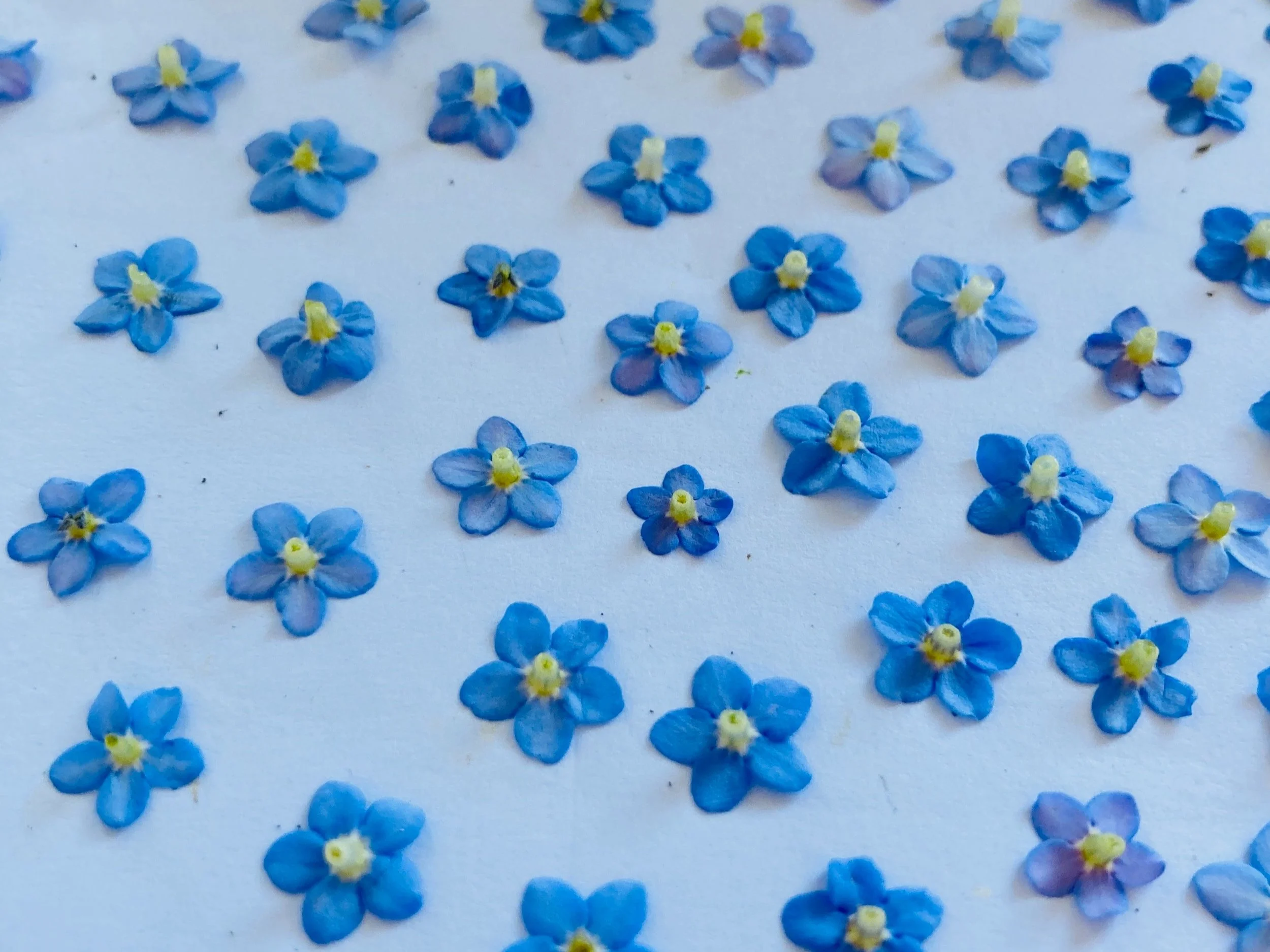
Pressing Forget-Me-Nots
Forget-me-nots are a simple flower that dry out quickly and can press beautifully. However, there are a few things to note which will help you to achieve a well-shaped flower and vibrant colour.
The following steps apply to pressing using a traditional flower press. You can, of course, use a microwavable press if you prefer.
In the early days of blooming you’ll find more of the scorpion tail-shaped buds, which are a lovely feature when pressed. As the season continues, the flowers will unfurl in abundance, often between protective leaves, which can be removed to reveal the flowers for pressing. As they head towards the end of their lifecycle you’ll notice them becoming quite ‘leggy’; tall stems with empty sepal cups running along them and only a few flower heads at the top. You can press forget-me-nots at all stages of their lifecycle - they’re a very versatile flower - but when you press them will depend on the look or effect you want to achieve.
The leaves of forget-me-nots press well, but they change colour (to brown or yellow) much more quickly than the blue petals. Often I remove the leaves and press just the petal heads and stems.
An interesting little fact about the flower heads: their yellow centres are an indicator to pollinators that nectar is available, and will change to white once pollinated. You’re more likely to find ones with yellow centres towards the start of their lifecycle, if you want to capture that signature forget-me-not look.
Don’t ignore them in the press! Keep level, even pressure against them to ensure they don’t shrivel up and wither during the drying process. Whilst in the press, I highly recommend continuing to check on their progress and change out their papers. If left against damp pages, they’re more likely to shrivel and brown.
To press just the flower heads/petals: first remove the individual blue heads from the stems. Next, use a pair of tweezers to gently remove the sepals (the small green ‘cup’ that holds the petals in place). Place them face-down on your page to achieve a lovely, open-faced, star-like shape. Great for use in jewellery! You can of course leave the sepals in place when pressing individual heads, but they’re more likely to show through the petals and warp them - meaning you don’t get a defined, open-faced flower.
Bear in mind pinks can turn to purple or blue. For more information on why and how the colours of flowers change in the press, see my blog post on this.
Often forget-me-nots have a habit of sticking to your pages as you press them. When removing them from your press, gently bend the page, encouraging the flower to pop off the page. If you’re bending the page but it’s still not coming away, use your finger or a pair of tweezers to encourage the edge of a petal to lift off the page and then continue to peel them off.
If you’ve enjoyed this blog, you can support my work here - thank you!
To learn more about the beautiful art of flower pressing and gain skill and confidence in your results, see our Courses and Guidebooks for detailed, step-by-step guidance.
Use in Arts and Crafts
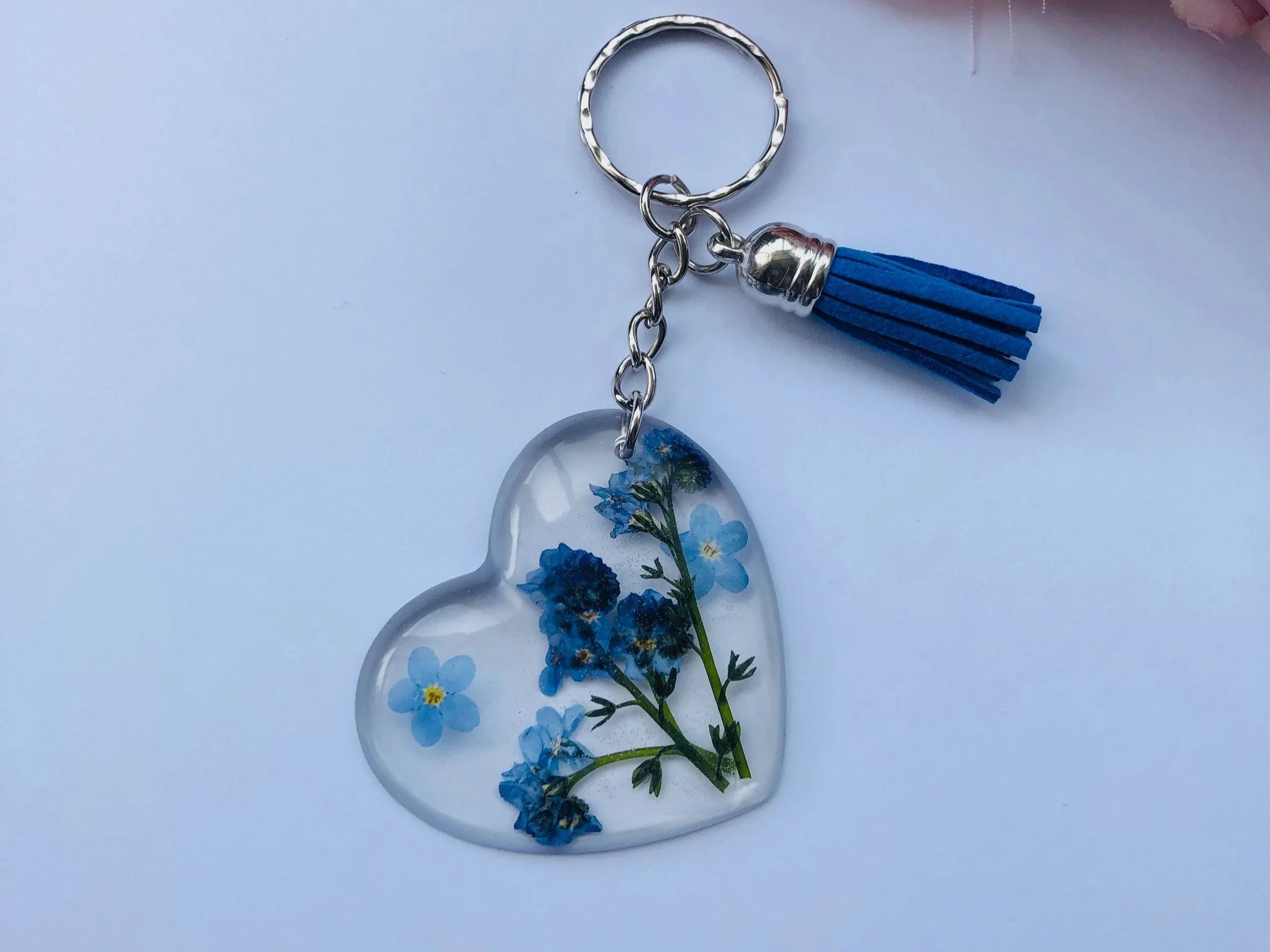
Before giving up epoxy resin last year, I used to use a lot of my pressed forget-me-nots in jewellery and a very popular keyring. As soon as Spring sprang, I’d be out in force restocking my supplies. Despite no longer selling my artwork, I still love to press forget-me-nots and use them for all types of crafts. If you’re looking for craft ideas, see my blog ‘5 Crafts with Pressed Flowers’ for inspiration.
Top Tips:
It’s worth noting forget-me-nots need to be completely dry before using them in epoxy resin or sealing them. The heat generated from the exothermic reaction of epoxy resin can cause them to turn a vibrant, neon-like green colour, as can any moisture remaining in the flower. Try to add them to your resin towards the end of its pot life and submerge them gently. (For more guidance on epoxy resin, see the guidebook.) Likewise, some sealants, such as Mod Podge®, can cause forget-me-nots to turn brown. Apply glue sparsely and try not to coat them in it to seal them.
Final Thoughts
In a world that moves quickly and forgets easily, the forget-me-not is a gentle plea to slow down and cherish what matters. Whether you wear it, plant it, craft with it, or simply admire it, this flower is a request not to be forgotten and a promise never to forget.
