

Which Wedding Flowers are Best for Preservation?
A Guide for Brides and Flower Preservation Artists
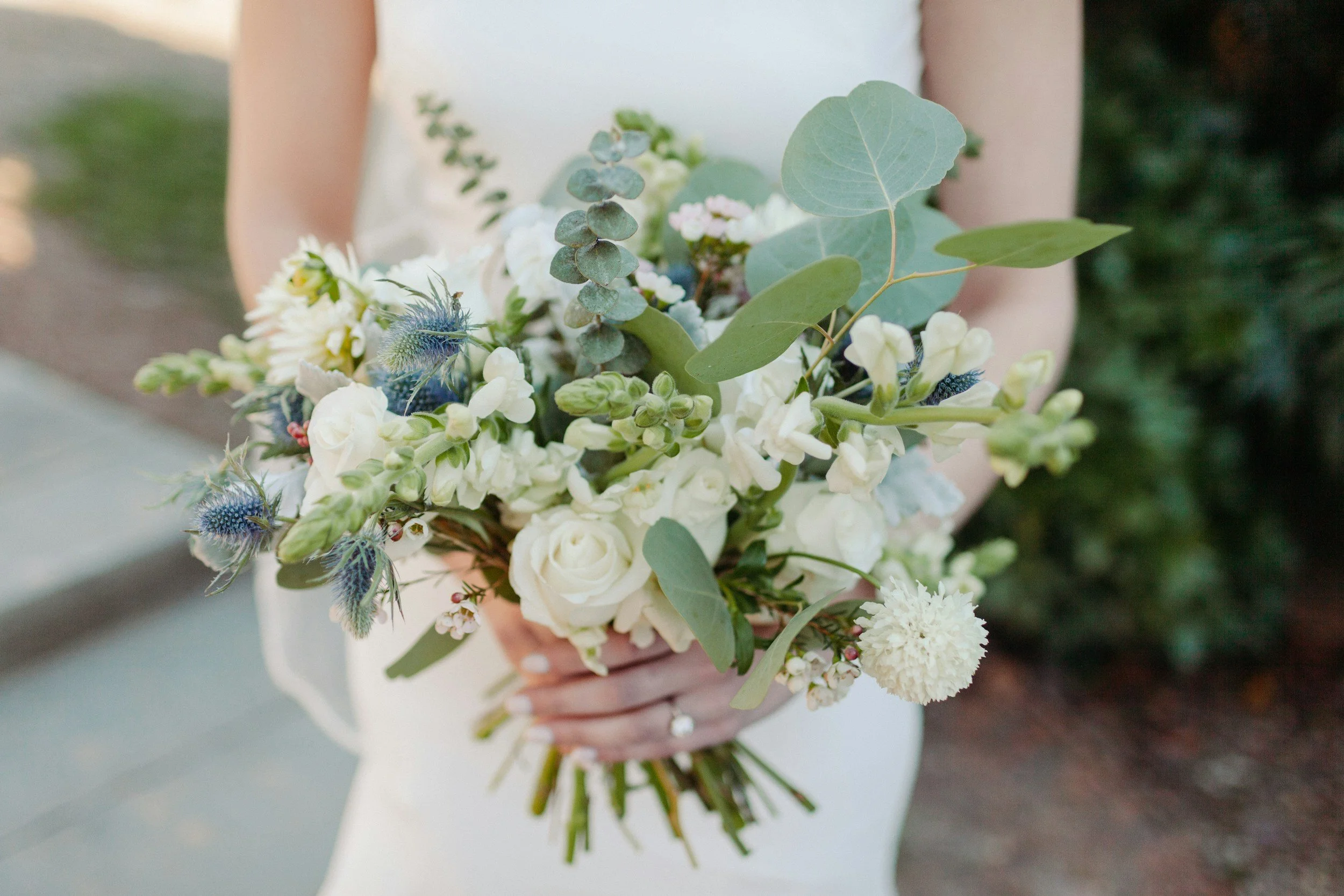
There’s something uniquely sentimental about wedding flowers. They’re chosen with such care - colours, textures, meanings - and then held close through one of the most emotional days of a person’s life. It’s no surprise that so many brides want to preserve them, and that so many artists feel called to help.
Whether you’re a bride choosing your bouquet or a preservation artist working behind the scenes, understanding which flowers press well (and which don’t) makes all the difference. Some blooms keep their colour beautifully. Others hold their shape like little sculptures. And a few… well, they’re best admired fresh.
This guide brings together my own experience as a pressed‑flower artist, along with tips for anyone wanting to create lasting botanical keepsakes.
Flowers That Press Beautifully
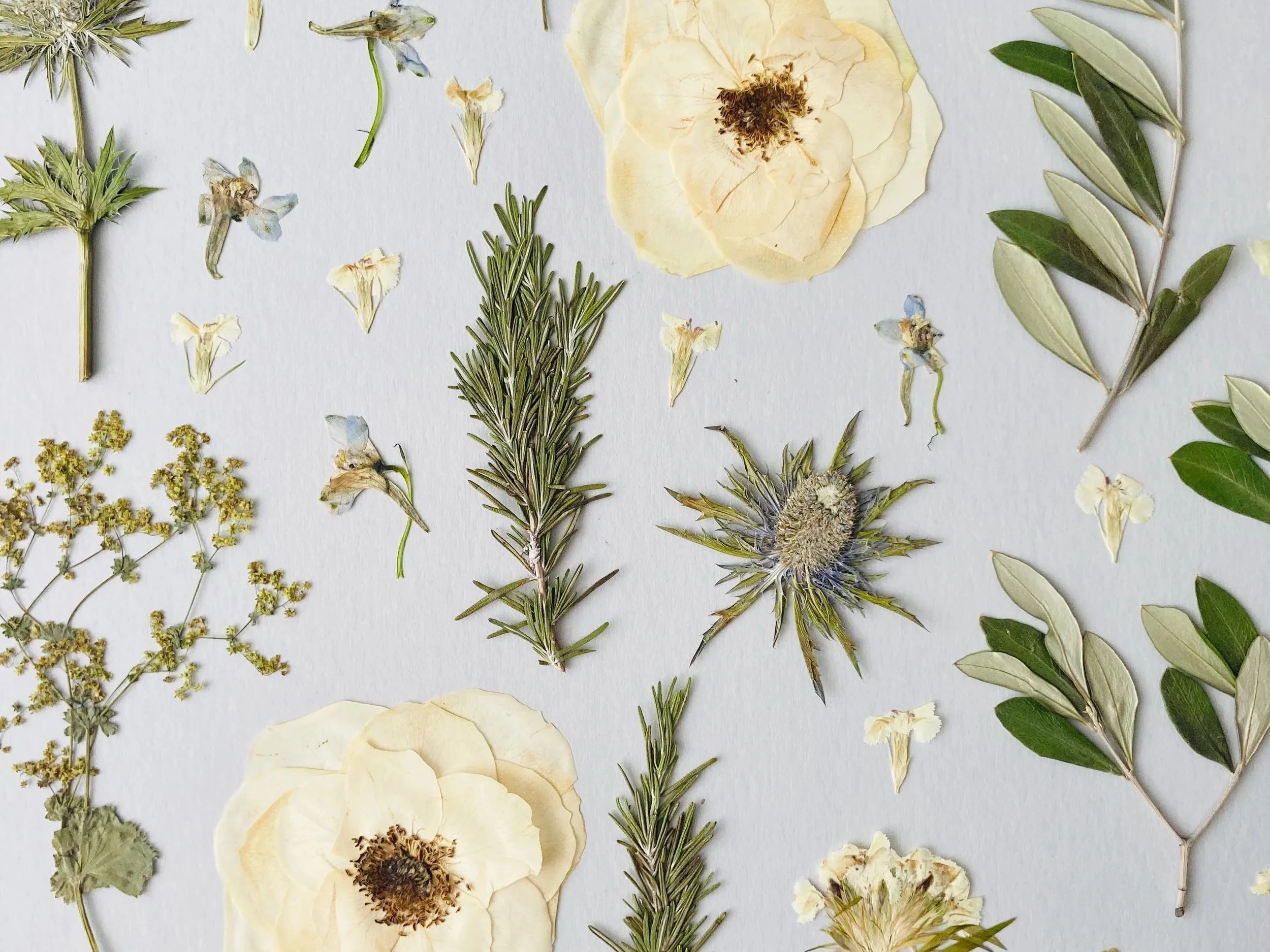
These are the reliable favourites; the ones that keep their colour, shape, and personality long after the wedding day.
Roses (especially spray roses)
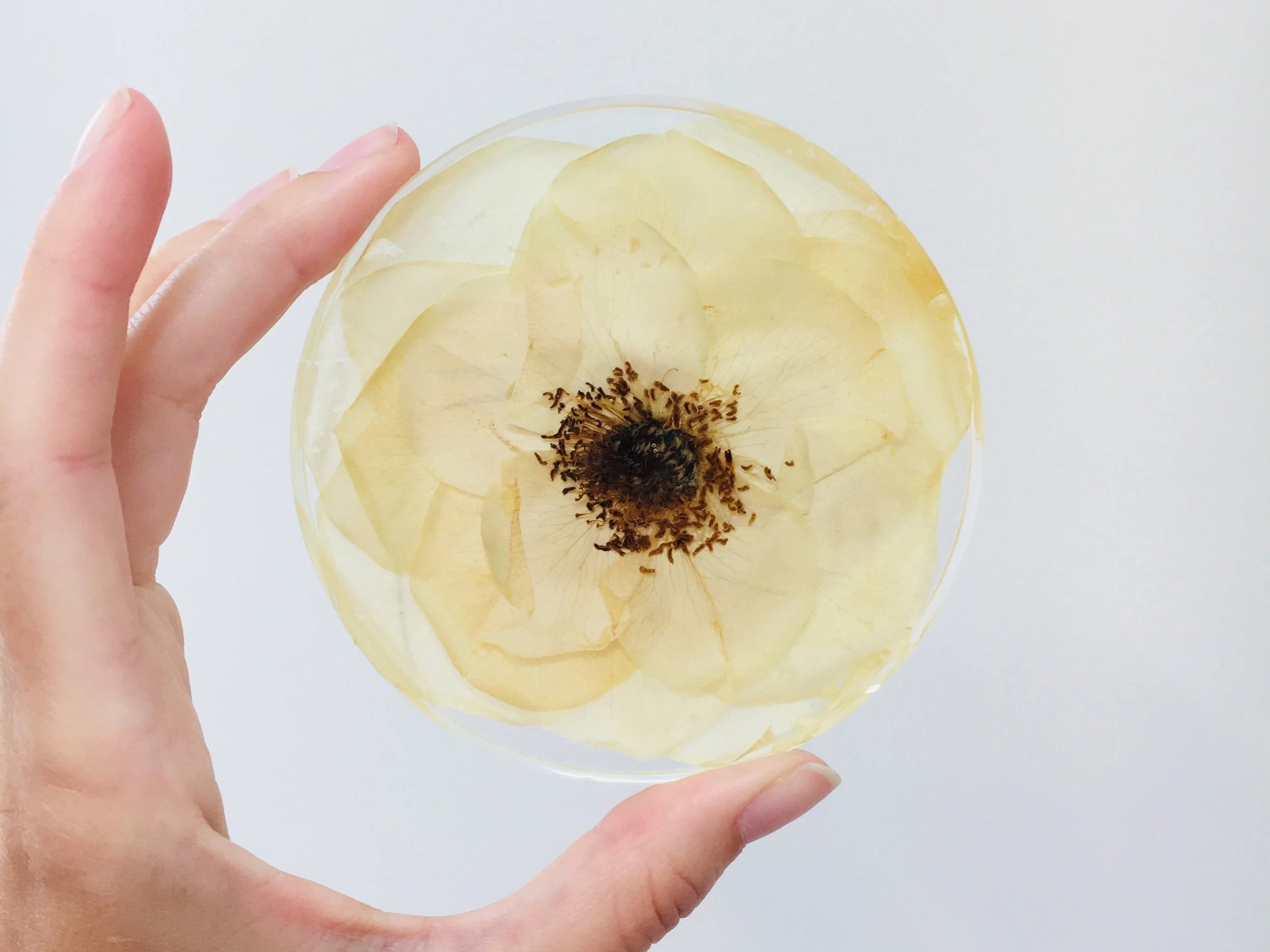
Roses are a classic for a reason.
Pressed, they hold their shape well.
Spray roses flatten more evenly than large-headed varieties.
Pale tones often dry softer and more romantic. Darker colours can deepen in the press.
Delphiniums & Larkspur
A great choice for brides and loved by preservation artists. These are preservation treasures.
They retain colour exceptionally well.
Individual florets press like tiny pieces of confetti.
Perfect for filling negative space in a composition.
Hydrangea
Hydrangea have made a comeback in recent years, and you can see why! Their petals press into delicate, papery shapes.
Blues and purples stay vibrant.
Whites and greens dry into soft vintage tones.
Ideal for adding texture and movement.
Cosmos
A personal favourite! Light, airy, and wonderfully consistent.
They press flat with minimal bruising.
Their petals keep a lovely translucency.
Nigella (Love‑in‑a‑Mist)
A dream for detail lovers.
The petals press well, but the seed pods are the real stars.
They add structure and a touch of whimsy.
An extra tip: don’t overlook greenery!
Foliage presses beautifully and brings balance, texture, and movement to a preserved bouquet. Some great choices to consider:
Eucalyptus: A classic choice. It dries to silver‑green tones and the leaves press flat and clean.
Ruscus: Smooth, elegant leaves that hold their shape beautifully.
Fern: Adds delicate texture and a sense of movement; perfect for airy compositions.
Olive foliage: Soft, muted greens that dry into a timeless, Mediterranean look.
Dusty Miller: Velvety, silvery-green foliage to add a subtle vintage touch.
Thlaspi (green bell): Light, whimsical, and wonderful for adding fine detail.
Flowers That Can Be Preserved… With Care
These blooms can be gorgeous in a pressed piece, but they need a little extra attention.
Peonies
A bridal favourite, but tricky to preserve!
Large peonies can brown or wrinkle.
Best results come from pressing individual petals or smaller side blooms.
Coral varieties fade significantly.
Ranunculus
Stunning but delicate and need some extra attention to avoid them turning ‘mushy’.
Their many layers can trap moisture.
Deconstructing the flower for pressing often works better than pressing the whole bloom.
Dahlias
They can be unpredictable.
Multi-petalled varieties can be tricky to press. Their centres retain moisture and they are quickly susceptible to browning or mould.
Brighter colours often retain their colour better than lighter ones. Dark dahlias often dry much deeper in colour.
Flowers That Don’t Press Well
These are the heartbreakers; beautiful fresh, but not as suited to pressing.
Succulents
Succulents look modern, exotic and alternative in a bridal arrangement, but they’re one of the hardest plants to press because of how they survive in the wild. They are designed to store water to help them thrive in dry climates therefore, many have thick, waxy skins that lock that moisture in. When placed in a press, all that trapped water has nowhere to go, so they tend to bruise, turn translucent, or even mould before they can dry. For this reason, succulents are best enjoyed fresh, while choosing more press‑friendly blooms for long‑lasting keepsakes.
Orchids
Orchids are breathtaking in a bouquet, but they’re notoriously difficult to press because of the way they’re built. Their petals are thick, waxy, and full of moisture; adaptations that help them survive in humid, tropical environments. When placed in a press, that moisture becomes trapped, causing the petals to bruise, turn translucent, or brown. Even when they do dry, orchids often lose their colour rapidly. That’s not to say they can’t be pressed, because you can get some wonderful results, but it’s best to consider their longevity in a keepsake.
Calla Lilies
Calla lilies are elegant and sculptural, but they’re surprisingly difficult to press because of their natural structure. Their petals, which are actually modified leaves called spathes, are thick, smooth, and waxy, designed to hold moisture and maintain that beautiful, curved shape. When placed in a press, this density works against them: the moisture becomes trapped, the surface bruises easily, and the bloom often turns brown or translucent. Even when they do flatten, calla lilies tend to lose their form and colour entirely. For this reason, they’re best admired fresh, while choosing softer, thinner‑petalled flowers for preservation.
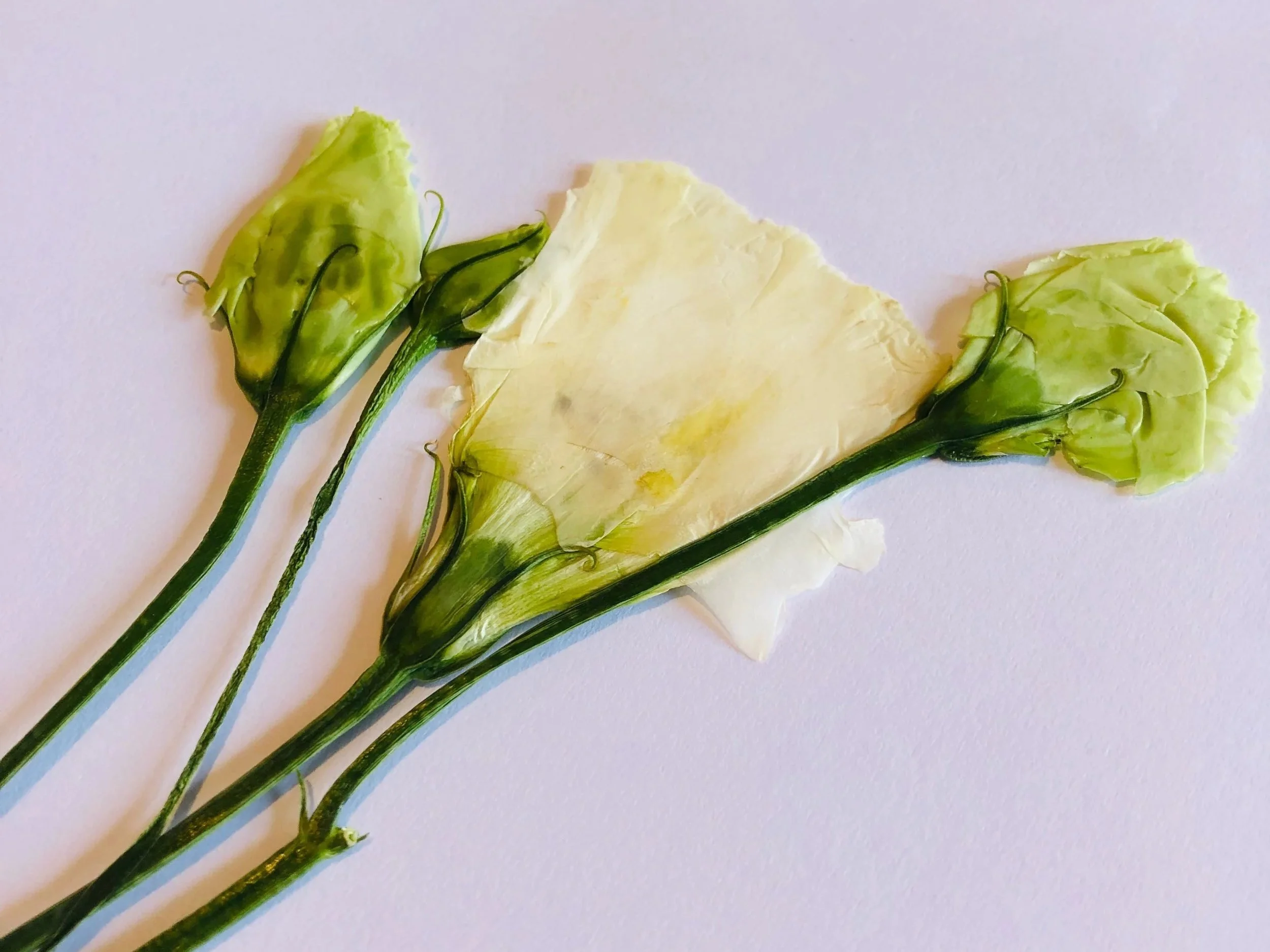
Lisianthus
Lisianthus are beautifully romantic flowers; it’s easy to see why they’re a popular bridal choice, but they are often the bane of a preservation artist’s life! Lisianthus can be challenging to press because of their naturally delicate, moisture‑rich petals. In the wild, they grow in warm climates and hold more water than you might expect from such a light, ruffled bloom. When placed in a press, that retained moisture can cause the flowers to rapidly brown or yellow. Their layered structure also means the inner petals often trap humidity, leading to browning and mould. While lisianthus can sometimes be preserved in parts, especially the outer petals, they’re not the most reliable choice for pressing, so it’s worth pairing them with more predictable, paper‑thin blooms if preservation is the goal.
Tips for Brides Choosing Flowers for Preservation
If you’re planning to have your bouquet preserved, a few small choices can make a big difference.
Choose a mix of “hero” blooms and smaller supporting flowers. This gives your artist more flexibility in composition design.
Don’t overlook greenery! The right greens can frame your hero blooms and make the whole composition feel more natural and intentional.
Avoid heavily dyed or painted flowers. They can bleed or stain during pressing.
Ask your florist for varieties known to dry well. These days, many florists are familiar with preservation-friendly options.
Keep your bouquet cool and hydrated after the wedding. Freshness at the moment of pressing is everything. There are some tips on my Commissions page on caring for your bouquet.
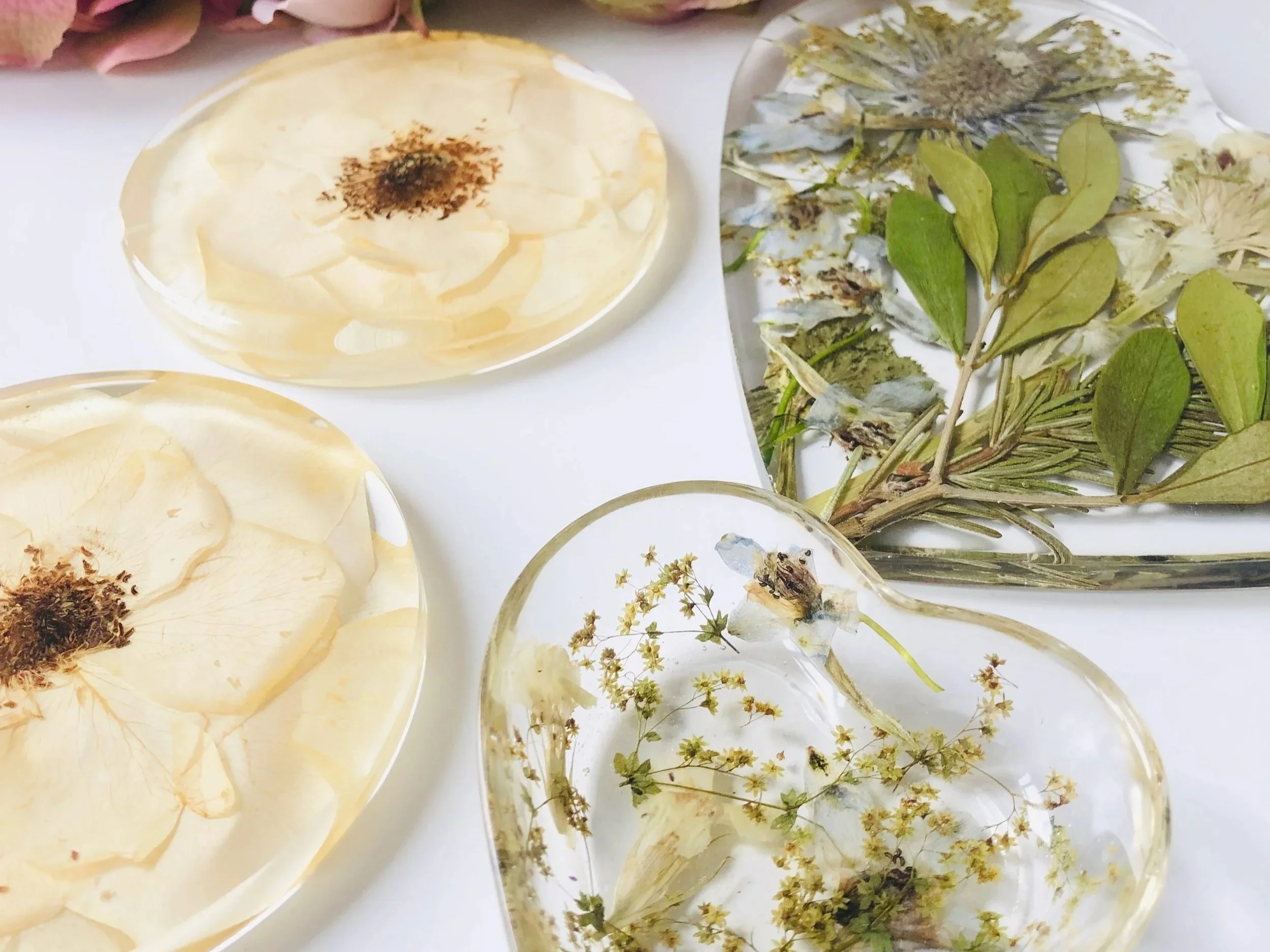
Tips for Preservation Artists Working With Bridal Flowers
A few insights from one artist to another:
Prioritise the most fragile blooms first. They deteriorate quickly once out of water.
Press duplicates when possible. Brides often want their “main” flowers featured, so having backups helps.
Document the bouquet before disassembly. A quick photo helps you to honour the original shape and style.
Expect colour shifts. Whites may yellow, pinks may soften, purples may deepen - communicate this clearly to your client.
Use a mix of traditional and fast-drying methods. Some blooms respond better to one or the other.
Explore the anatomy of the flower carefully. Work with its shape and if in doubt, deconstruct and reconstruct.
Experiment with mockups. Your client will be drawn to your unique style but send a few choices in composition.
When preserved thoughtfully, wedding flowers can become heirlooms that hold the sentimentality of a moment, and the story of a day.
If you’ve enjoyed this blog, you can support my work here - thank you!
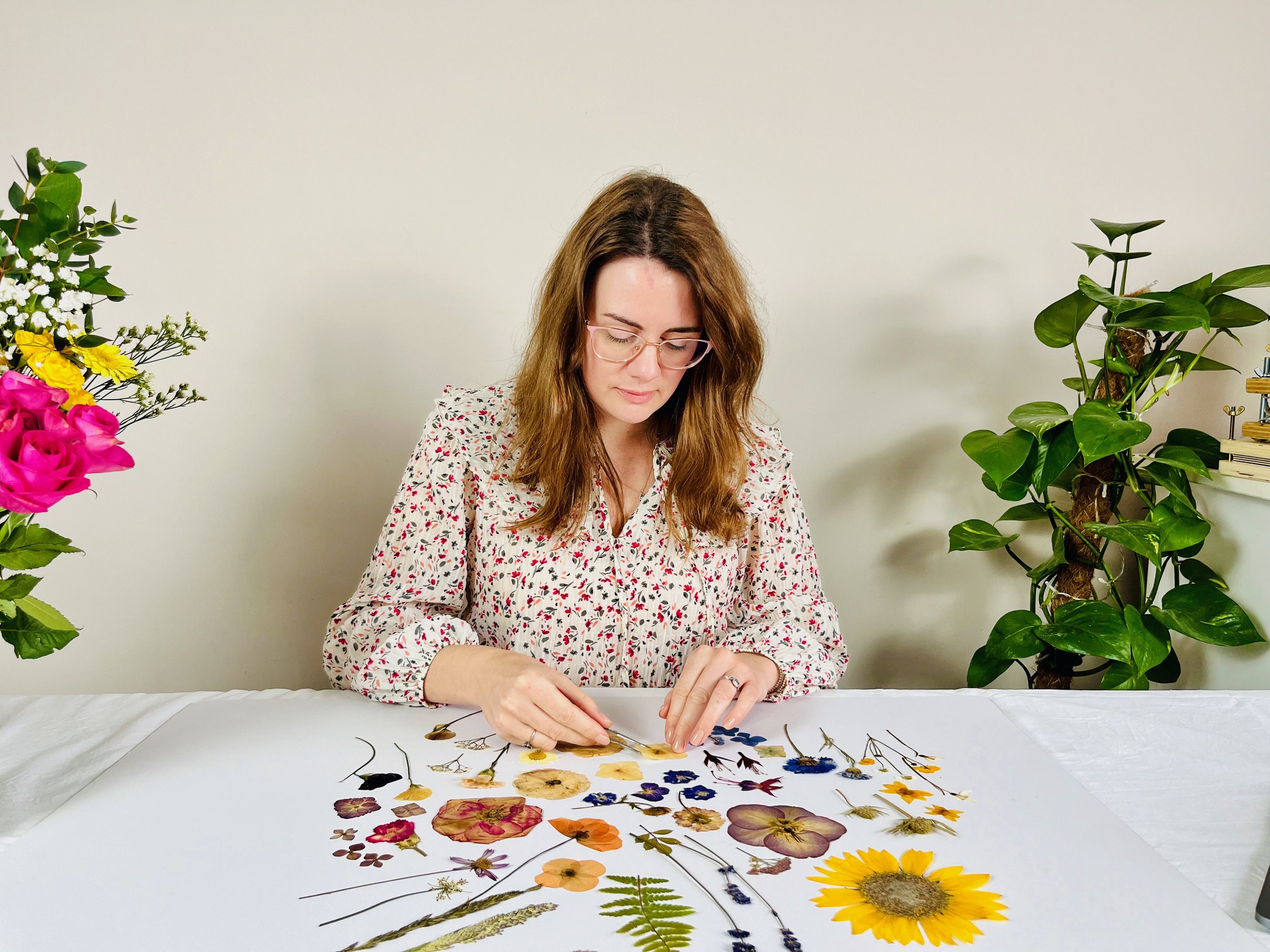
Learn the methods to get beautiful results in your pressing:
Whether you’re a bride dreaming of creating your own keepsake or an artist creating one on behalf of someone else, discover my courses and guidebooks and preserve flowers to perfection.
