

The Significance of the Daisy
Daisies are a humble flower and have a long-held significance to us. The birth flower of April, daisies often conjure images of spring and summer. They also evoke memories of childhood and a personification of youth and purity. But where did our connections to this flower begin and what significance do daisies hold?
The Origin of the name ‘Daisy’
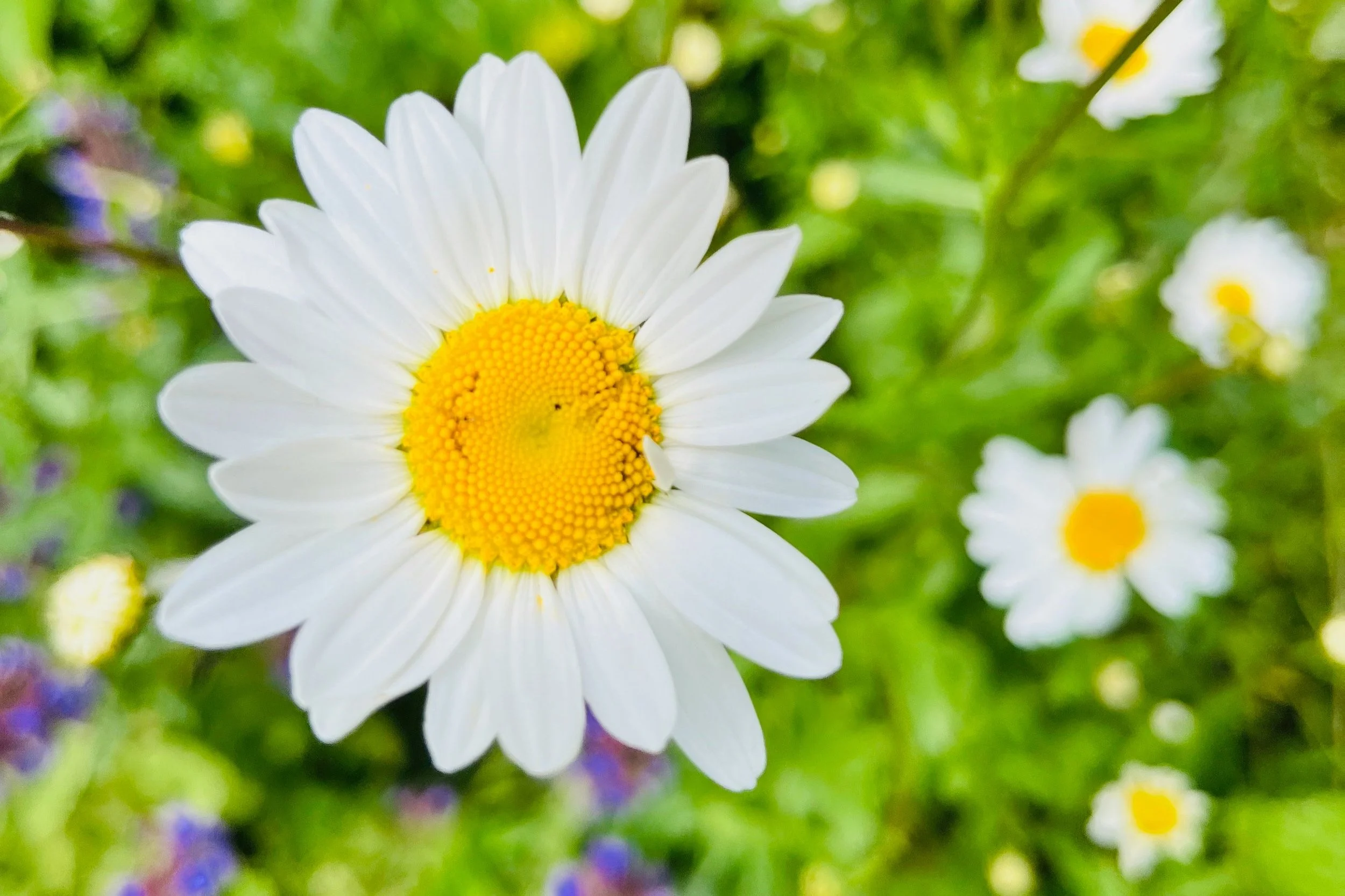
The name ‘daisy’ purportedly comes from the Old English ‘daes eage’ meaning ‘day’s eye’. The common English daisy (bellis perennis) is nyctinastic; its petals close around its golden centre at night and re-open in the morning. This doesn’t mean they go to sleep, it’s a natural response to changes in light and temperature, hence their movements led to their colloquial name. Geoffrey Chaucer called them, “the eye of the day” (Chaucer, ‘Legend of Good Women’) due to this movement during the night to day. The idiom, ‘fresh as a daisy’ may have originated from its colloquial name too.
There are over 30,000 species belonging to the daisy family (scientifically known as Asteraceae or Compositae), including:
chamomile
chrysanthemum
cosmos
dahlia
dandelion
fleabane
cornflower
lettuce
marigold
sunflower
yarrow
zinnia
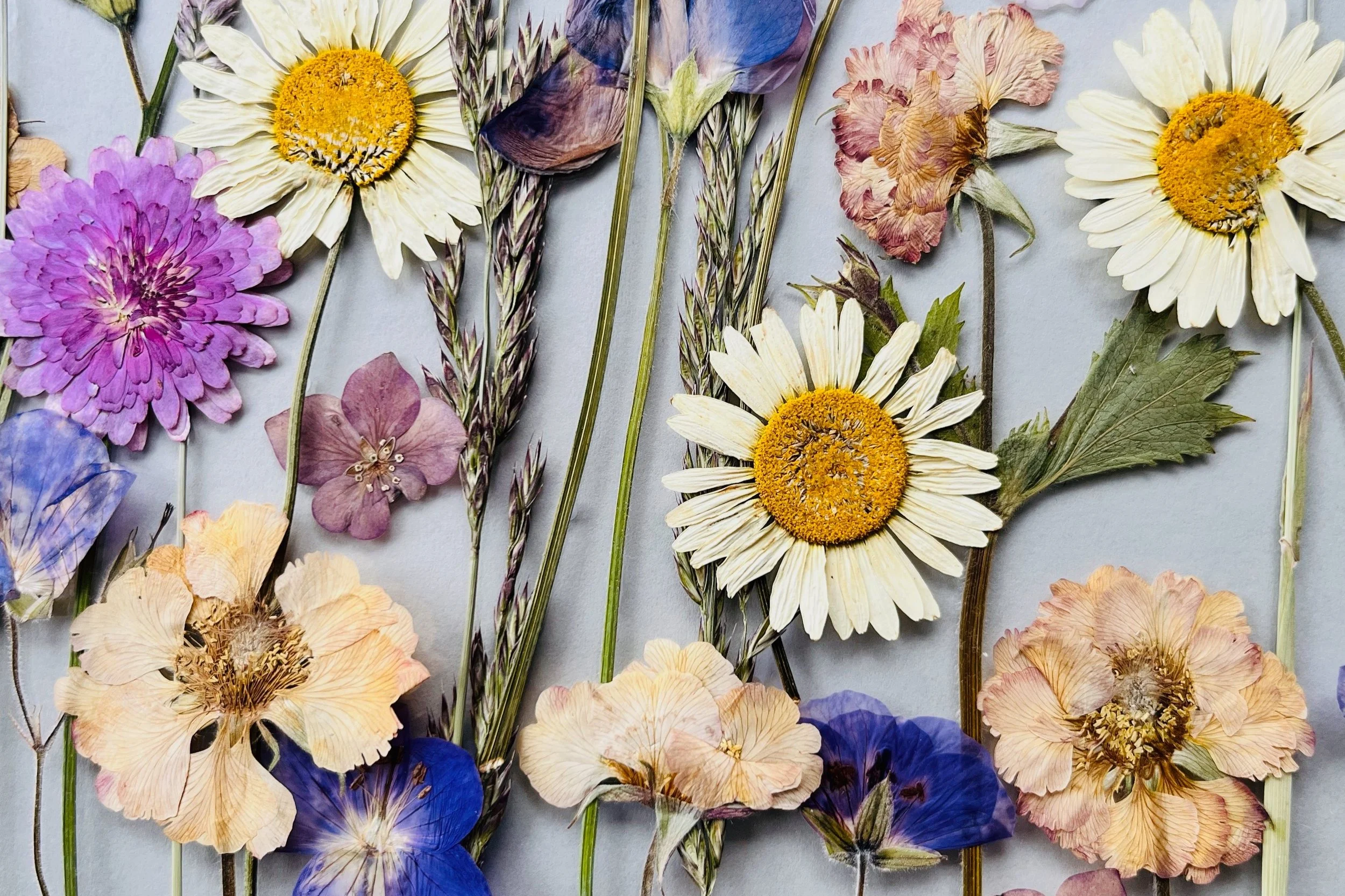
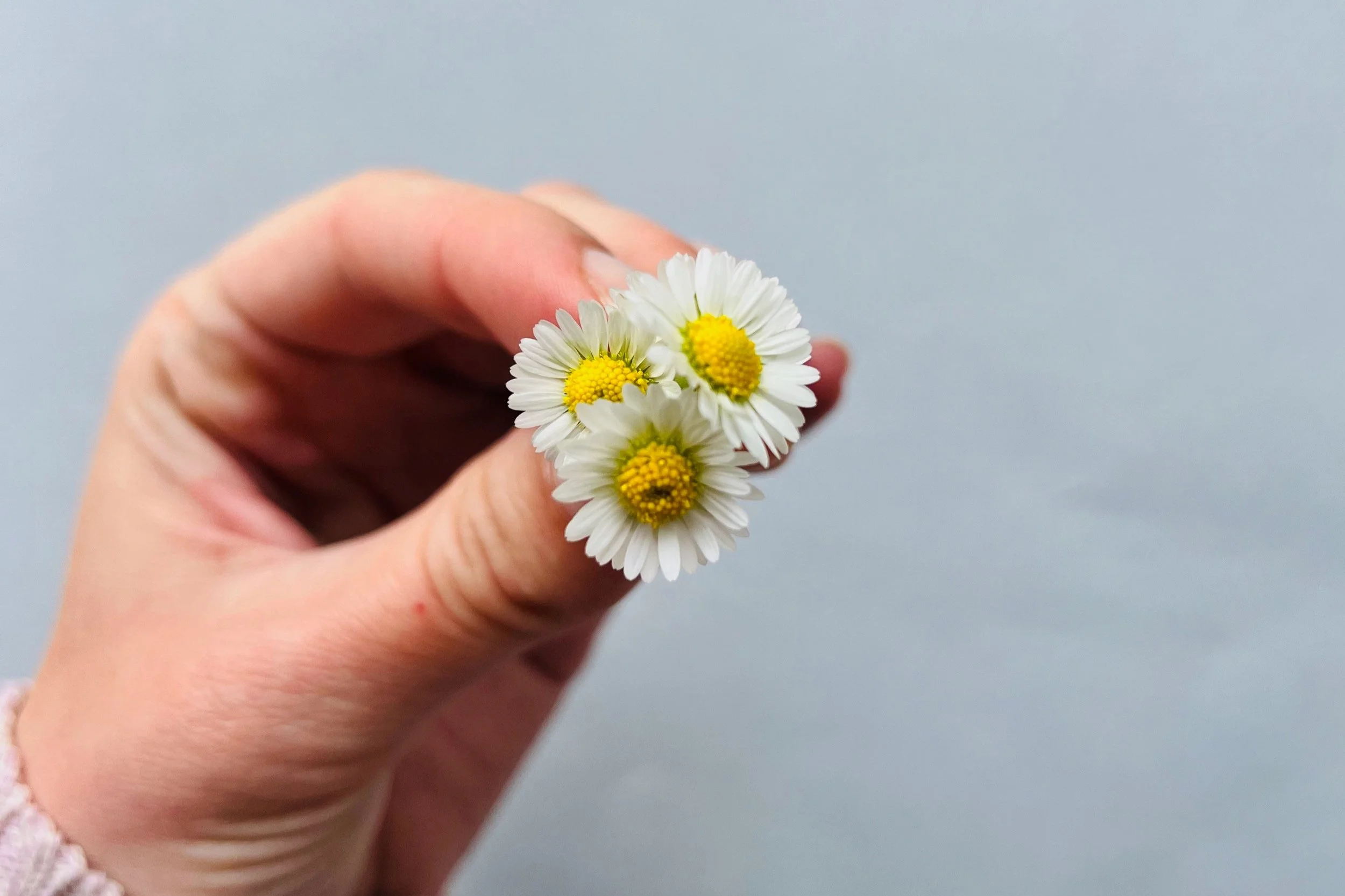
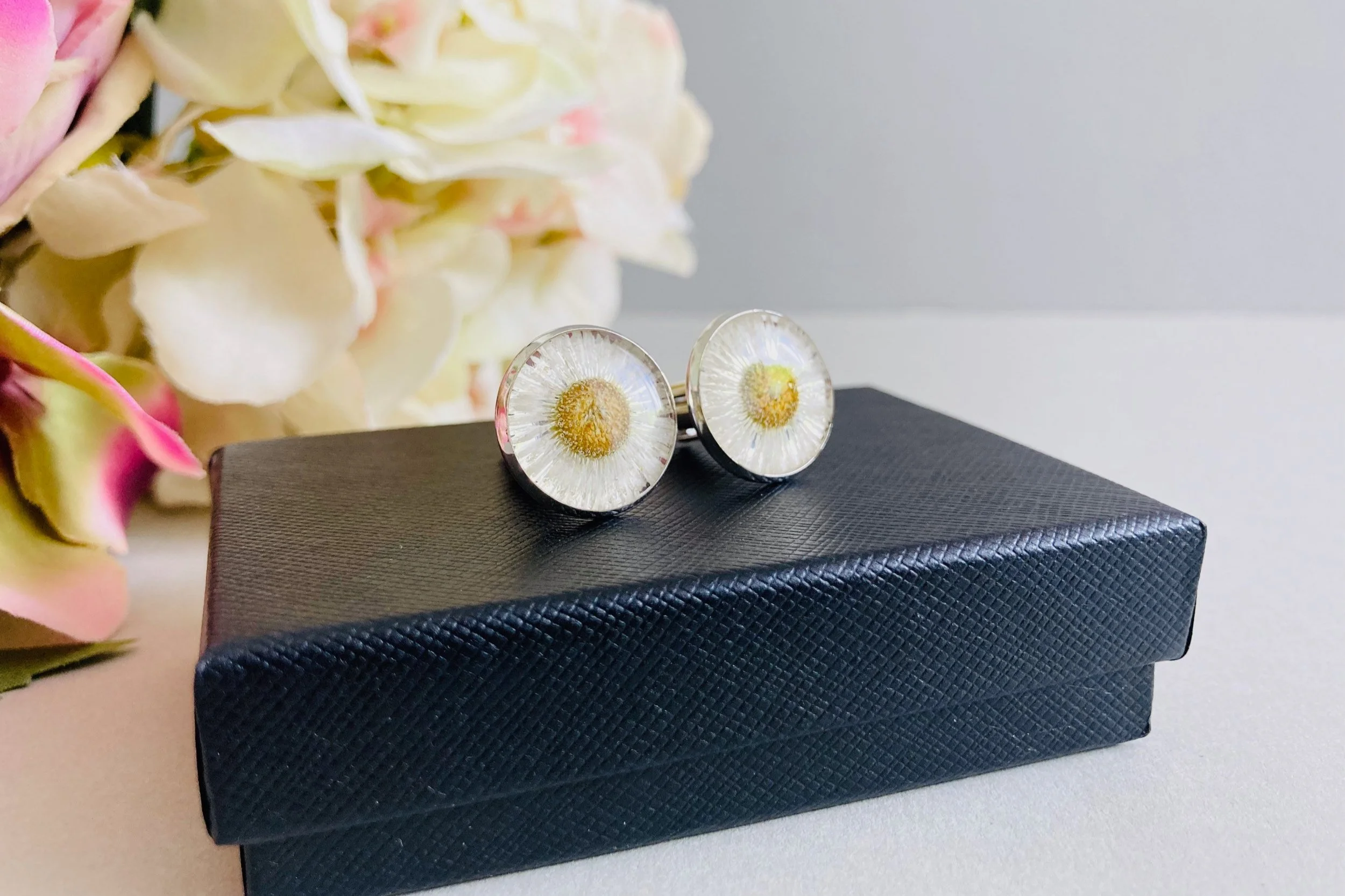
Bellis Perennis is the most common garden daisy, also known as the English daisy, and is often found peppering lawns and hedgerows. It’s a lovely little flower to press (which we’ll come to later). The word Bellis may originate from the Latin word bellus meaning ‘pretty’, hence the flower often has associations to beauty too.
Though the Bellis Perennis is known by many common names, one is interestingly Bairnwort. ‘Bairn’ from the Scottish meaning a child and ‘wort’ simply meaning ‘plant’. This name could be attributed to children picking daisies to make crowns for festivals such as May Day, or to wear as protection against being carried away by fairy folk. But could this also be where the phrase ‘whoops a daisy!’ comes from too, when someone makes a simple or even childlike error? It connects the flower to childhood, and the symbolic meaning of innocence.
Daisy Folklore
Flowers have held great meaning to people for centuries; from having spiritual significance to cultural and medicinal.
We often associate the lotus and papyrus flower with Ancient Egypt, but artefacts from jewellery and homeware to tomb decor, have also been discovered depicting daisy flowers. It’s believed they could be chamomile flowers, which are part of the daisy family and as we know, have medicinal benefits.
Daisies are also intrinsically linked with womanhood and childhood. In Ancient Greek mythology the daisy flower is seemingly connected to the Goddess, Artemis: the Goddess of hunting, wildlife, chastity, childbirth and womanhood. According to Greek mythology, Artemis pursued the nymph Leucippe who called to the Gods for assistance and they transformed her into a daisy flower. Aside from the tale, the ancient Greek to Latin name for Wormwood, which is also part of the Asteraceae family, is Artemisia. Wormwood is renowned for its anti-parasitic, anti-inflammatory and anti-fungal properties and has been associated with gynaecological uses such as regulating menstruation, therefore conjuring associations with womanhood.
The Ancient Greek story of Artemis may have descended to the Romans too. A myth tells of the nymph Belides who turned herself into a daisy flower to escape the advances of the Roman god of gardens and trees, Vertumnus. As mentioned earlier, Bellis Perennis is another species of the Asteraceae family and the name comes from the Latin bellus, meaning ‘pretty’ (though there’s some debate over its alternate meaning ‘war’ too). Could the name Belides have descended to Bellis?
In Norse mythology, daisies are associated with the Goddess of love, beauty and fertility, Freya. When she cried, her tears turned to daisy flowers and scattered over the land. Daisies have long been associated with love. It’s believed the game of chanting, ‘he loves me, he loves me not’ whilst plucking petals from a flower originates with the ox-eye daisy. The pastoral game is usually associated with young maidens using daisies as the oracle of true or unrequited love.
The connotation of daisies as representing childhood, as well as virginity also comes from Medieval Christianity. Depictions of the Virgin Mary with the Christ Child often incorporate daisies, usually at her feet, growing naturally in the grasses, which became a symbol of innocence and purity.
Further Uses
Another common name for the daisy is ‘Bruisewort’. This may be due to it being used to treat wounds. It’s said Roman soldiers would crush daisies and rub them into their wounds and apparently 18th Century physicians would use them to treat people too. It’s also been said Henry VIII used daisies to treat a multitude of health issues, including inflammation, gout and muscle pain.
Flowers such as calendula and camomile have long been used to treat health problems- a little camomile brewed as a tea is lovely and calming- but I wouldn’t recommend jumping into the garden to make your own tonics and lotions- always seek medical advice first!
Colour Symbolism
Overall, the daisy can be said to conjure multiple meanings. It has long-held associations with childhood, innocence, love and beauty. We’re often drawn to it due to its simplicity, but also its colour.
The colour of flowers have a renowned significance to us and gifting flowers based on their colour has held meaning for centuries. During the conservative Victorian era, flowers would have secret meanings and messages, known as Floriography. Giving a daisy would signify loyalty and the ability to keep something a secret.
Here are a few colours and the meanings often assigned to them
White - innocence and purity
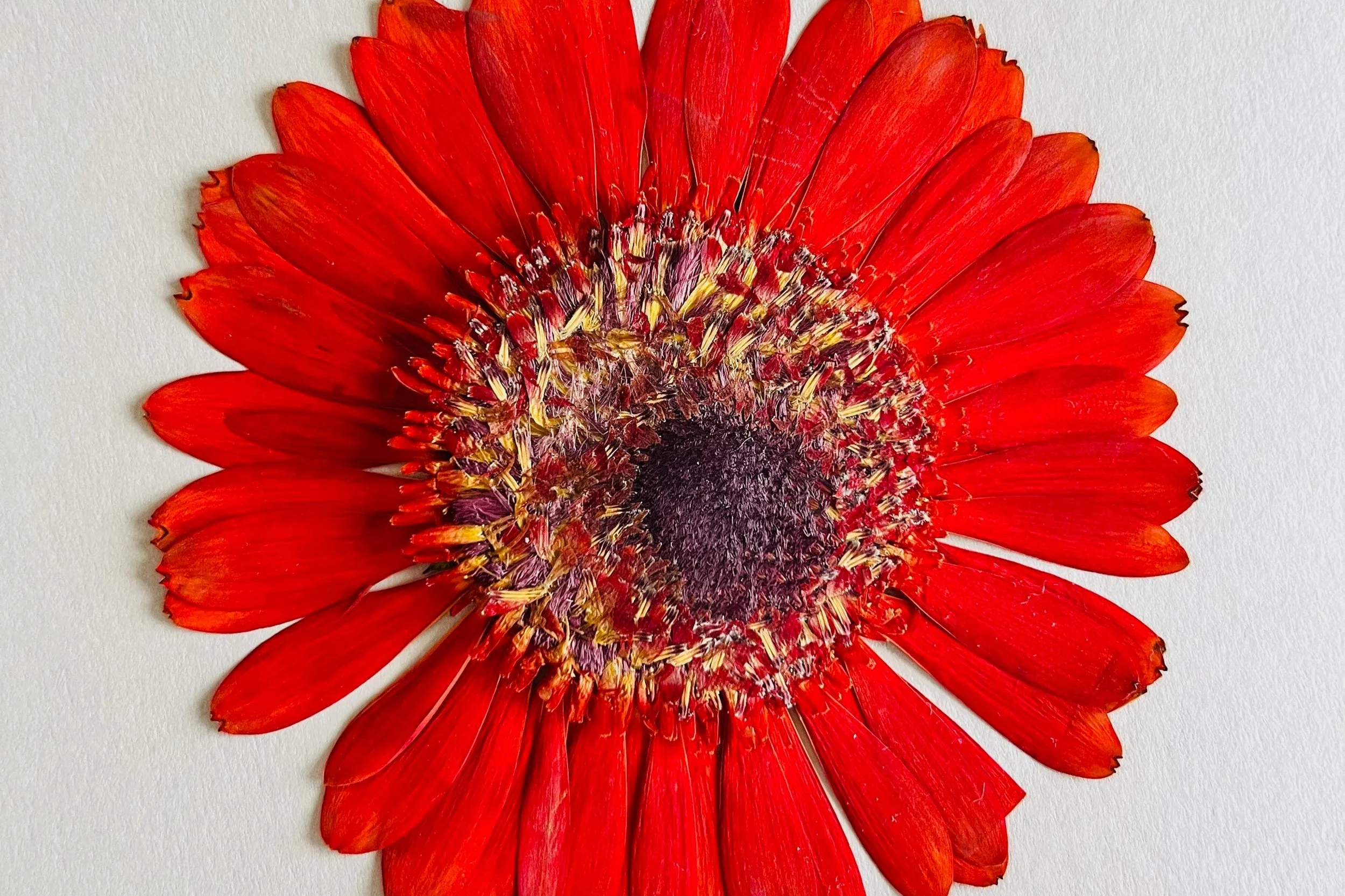
Red - devotion, love and romance
Yellow - optimism, friendship, cheerfulness and well-wishes
Pink - platonic love, gentleness and romance
Blue - loyalty, trust and honesty
Orange - happiness, joy, friendship and healing
Purple - peace, unity, pride and thinking of someone
How to Perfectly Press a Daisy
Daisies, particularly the common lawn daisy, camomile, calendula, zinnias and cosmos, are a great flower to press for beginners. Their simple shapes and structure make them ideal for the press or even a book.
However, a common issue is ensuring the petals retain their full shape. Often the centre of the flower is more raised and bulky, meaning it gets greater contact with your press and the petals wither or shrivel.
You can, of course, begin them in a microwavable press, which will absorb the initial moisture and then you can continue pressing in a book or traditional press.
If you are pressing them in a book or traditional press, there are a few quick tricks to help keep the petals lovely and full.
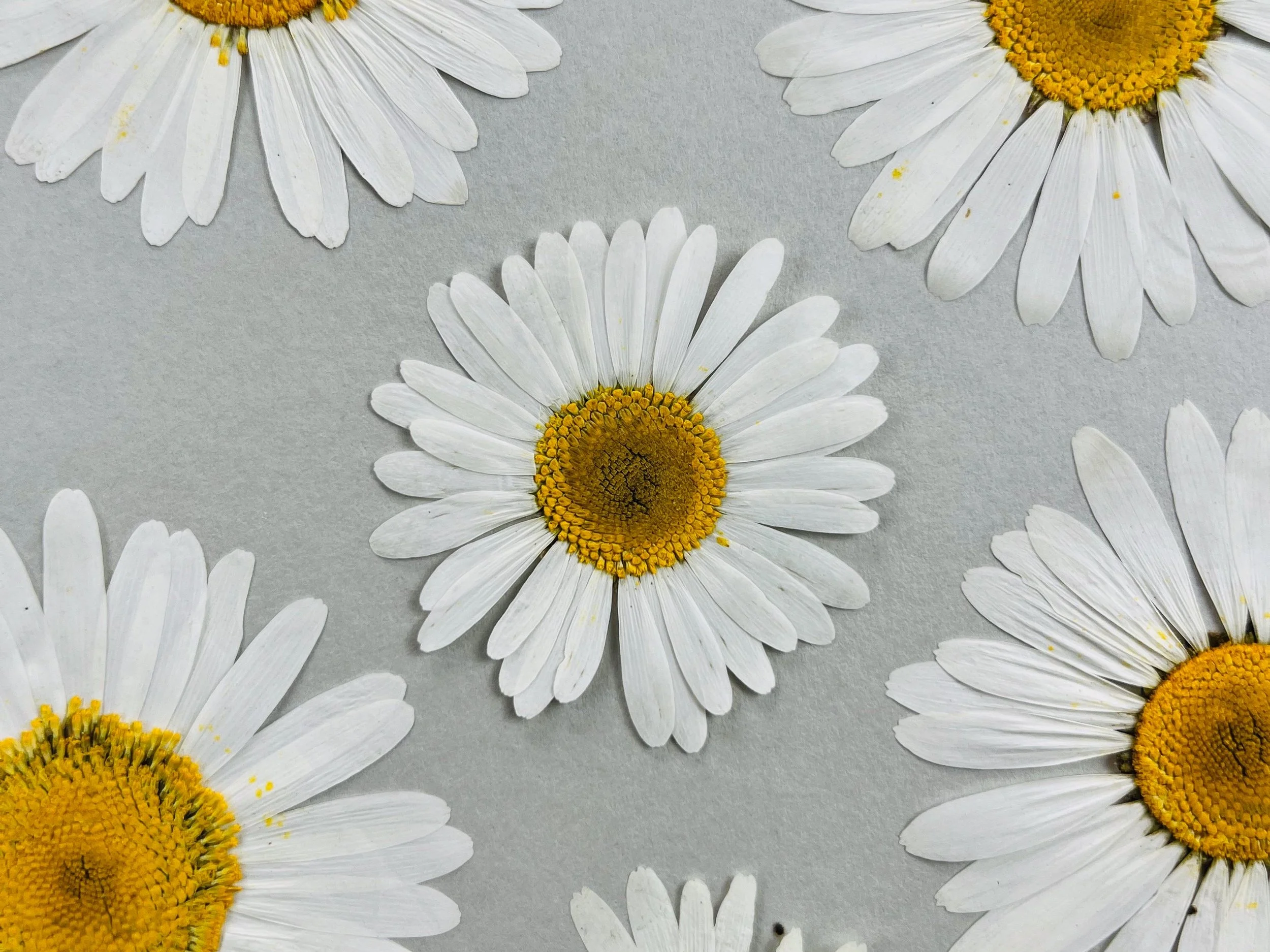
Keep increasing the pressure. The first few days are crucial when pressing daisies; you want to remove the moisture quickly and keep good, even pressure against the flowers.
Use the most absorbent papers. Blotting paper will remove moisture quickly and increasing the pressure after the first day will ensure the petals make good contact with it.
Using organic cotton fabric or even pressing the daisy between cotton wool pads can also help. Both the petals and centre of the daisy are able to make contact with a more flexible surface and therefore increase the likelihood of it drying out quickly with even pressure applied by your press or book.
Consider whether to keep the stem or not. If you keep the stem attached, gently press the flower head against it to encourage it into a flat shape and place it face-down into your press. Alternatively, remove the stem and press the flower head face-down in your press.
If you’ve enjoyed this blog, you can support my work here - thank you!
To Learn More about how to press flowers and achieve consistent and beautiful results, explore our online courses and helpful guidebooks.
